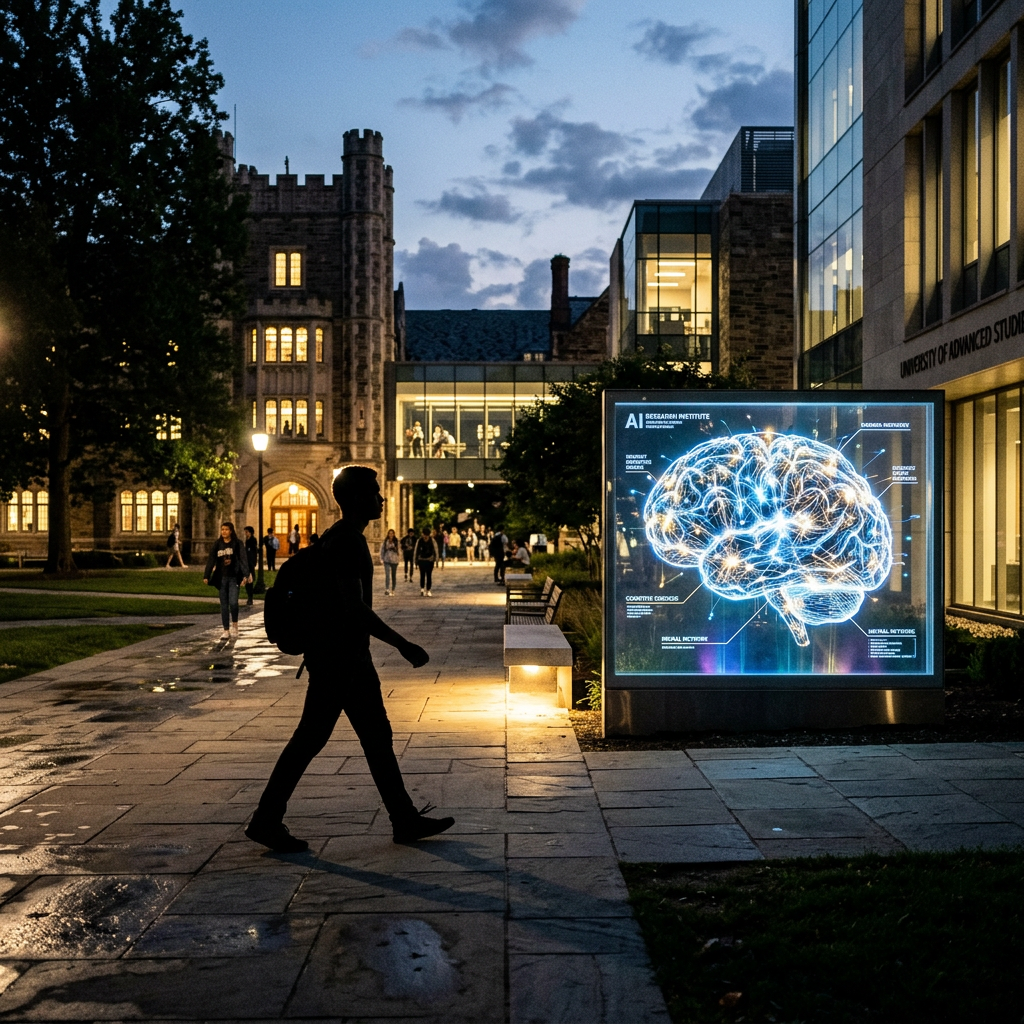
Silhouette of student walking near illuminated digital brain display on campus at twilight

Re-imagining Critical Thinking in Higher Education in the Age of Artificial Intelligence (Part 2)

By Dr. Gilbert A. Ang’ana

Did you miss Part 1 of this article series? Find it here. This article is part 2 of 4 of the series. Follow me for details of all the parts.

Artificial Intelligence Is Changing the Nature of Learning, Not Just the Tools of Learning

The conversation about artificial intelligence in higher education has largely focused on what students can do with AI. A far more important question, however, is what AI is doing to students’ thinking. This distinction is critical because education is fundamentally concerned with cognitive development rather than task completion. Universities do not exist to help students complete assignments efficiently; they exist to cultivate the intellectual capabilities that enable graduates to solve problems independently, make sound judgments, adapt to uncertainty, and generate new knowledge, especially at postgraduate level throughout their lives. Artificial intelligence therefore demands more than a technological response; it demands a re-examination of how human learning actually occurs.

Learning is often misunderstood as the accumulation of information. Contemporary research in cognitive psychology, neuroscience, and the learning sciences paints a very different picture. Learning is an active biological and cognitive process in which the brain constructs, reorganizes, and strengthens neural pathways through sustained engagement with ideas. Knowledge is not transferred into the mind like files copied onto a computer; it is actively built through questioning, reasoning, reflection, feedback, and repeated application. This process requires mental effort. Indeed, the very struggle associated with learning is not a sign of failure but evidence that meaningful learning is taking place.

One of the most recent concepts explaining this phenomenon is what Robert and Elizabeth Bjork describe as “desirable difficulties.” Their research demonstrates that learning strategies requiring greater cognitive effort often produce stronger long-term understanding than approaches that make learning appear easy (Bjork & Bjork, 2011). Activities such as recalling information from memory, solving unfamiliar problems, explaining concepts to others, and applying knowledge in new contexts create productive challenges that strengthen learning. Students frequently perceive these activities as difficult because they demand sustained mental engagement. Yet neuroscience suggests that such effort promotes learning by reinforcing neural connections associated with memory retrieval and conceptual understanding.

This insight has profound implications for artificial intelligence. AI significantly reduces many of the desirable difficulties through which expertise develops. A student struggling to synthesize competing academic perspectives can now obtain a coherent synthesis within seconds. A learner wrestling with the structure of an argument can request an instantly polished essay. Programming errors can be corrected automatically. Mathematical solutions can be generated without requiring students to identify underlying principles. While these capabilities undoubtedly improve efficiency, they may also limit opportunities for the cognitive effort that transforms novice learners into independent thinkers.

The same argument emerges from another principle in educational psychology: retrieval practice. Brown, Roediger, and McDaniel (2014), drawing upon decades of empirical research, demonstrate that actively retrieving knowledge from memory produces substantially deeper learning than repeatedly reviewing information. The act of recalling concepts, solving problems without immediate assistance, and reconstructing knowledge strengthens long-term retention while improving learners’ ability to transfer understanding to unfamiliar situations. Put simply, students learn more effectively when they are required to think rather than just recognize information.

Artificial intelligence changes this equation. When answers become immediately available, learners may bypass retrieval altogether. Instead of reconstructing knowledge through deliberate reasoning, they increasingly consult AI systems capable of generating persuasive responses almost instantaneously. The immediate result is greater efficiency. The long-term consequence, however, may be weaker conceptual understanding because the cognitive processes responsible for strengthening learning are exercised less frequently.

Closely related is the concept of metacognition, the capacity to think about one’s own thinking. Effective learners continuously monitor what they know, identify gaps in understanding, evaluate the quality of their reasoning, and regulate their learning strategies accordingly. Metacognition enables individuals to distinguish genuine understanding from superficial familiarity. It is widely regarded as one of the strongest predictors of academic success and lifelong learning. Generative AI presents both opportunities and risks for metacognitive development. Used well, AI can support reflection by providing alternative explanations, generating feedback, or exposing learners to competing viewpoints. Used uncritically, however, it can create an illusion of understanding. Students may mistake AI-generated explanations for personal comprehension simply because the output appears coherent and convincing. They may recognize an argument without ever constructing it themselves. This distinction is subtle but fundamental.

Understanding produced by external systems should never be confused with understanding developed through internal cognitive effort.

The work of educational psychologist John Sweller further illuminates this challenge. Sweller’s Cognitive Load Theory argues that human working memory possesses limited capacity and that effective instructional design should reduce unnecessary mental demands while preserving the cognitive effort essential for learning (Sweller, 1988). Importantly, Sweller does not advocate eliminating intellectual challenge altogether. Rather, he distinguishes between cognitive load that interferes with learning and cognitive effort that promotes it. Artificial intelligence has enormous potential to reduce unproductive cognitive burdens. For example, by automating repetitive administrative tasks, summarizing large volumes of information, or providing immediate formative feedback. These applications can free learners to focus on higher-order reasoning. Problems arise, however, when AI eliminates the productive cognitive work that students themselves must perform to develop expertise.

Educational researchers Paul Kirschner and Carl Hendrick have similarly cautioned against misconceptions about learning that prioritise convenience over cognition. Their work consistently demonstrates that expertise develops through deliberate practice, sustained attention, feedback, and repeated engagement with increasingly complex problems rather than through passive exposure to information (Kirschner & Hendrick, 2020). Learning, they argue, cannot be outsourced. Technologies may support it, accelerate aspects of it, or enrich it, but they cannot replace the biological and cognitive processes through which understanding is constructed.

Perhaps the most directly relevant concept for the AI era is cognitive offloading. Risko and Gilbert (2016) define cognitive offloading as the use of physical actions or external technologies to reduce the mental effort required for cognitive tasks. Humans have always offloaded aspects of cognition. We write notes instead of memorizing everything, use calculators instead of performing lengthy arithmetic mentally, and rely on GPS rather than memorizing complex routes. These practices are not inherently problematic. Indeed, they often enhance productivity and allow cognitive resources to be redirected toward more sophisticated tasks. The challenge arises when cognitive offloading replaces rather than complements higher-order thinking. Artificial intelligence differs fundamentally from earlier technologies because it increasingly performs tasks involving analysis, evaluation, synthesis, writing, reasoning, and creative generation, functions that lie at the heart of university education.

The critical question is therefore no longer whether students should use external tools. Rather, it is which aspects of cognition should remain fundamentally human.

Recent analyses by the Organisation for Economic Co-operation and Development (OECD) reinforce this concern. The OECD argues that generative AI should not be viewed primarily as a substitute for human intelligence but as a technology requiring education systems to place greater emphasis on analytical thinking, critical reasoning, ethical judgment, collaboration, and creativity, precisely because these uniquely human competencies become more valuable as AI capabilities expand (OECD, 2024). The future graduate will not compete with artificial intelligence by memorizing more information than machines. Graduates will distinguish themselves through their capacity to evaluate AI outputs, challenge assumptions, navigate ambiguity, integrate diverse perspectives, and make decisions grounded in ethical and contextual understanding.

The implications are profound. Artificial intelligence is not just changing how students learn; it is changing what it means to learn. The challenge for higher education is therefore not preserving traditional teaching methods but ensuring that technological efficiency does not come at the expense of intellectual development. Universities must intentionally design learning experiences that preserve the cognitive effort necessary for critical thinking while harnessing AI’s extraordinary capacity to enhance teaching and research. The objective should not be frictionless learning. It should be meaningful learning.

The New Crisis Nobody Is Talking About – The Outsourcing of Human Thinking

Public debate about artificial intelligence in higher education has been dominated by one issue: plagiarism. Universities have invested heavily in AI detection software, revised academic integrity policies, redesigned assessment regulations, and debated whether students should be permitted to use generative AI in coursework. While these discussions are understandable, they may also be distracting institutions from a much deeper educational crisis.

The greatest threat posed by artificial intelligence is not that students will submit work they did not write. It is that they may gradually stop doing the thinking that universities exist to develop.

This distinction fundamentally changes the nature of the debate. Academic integrity has traditionally focused on authorship. Did the student produce the submitted work? Was the assignment completed honestly? Were appropriate sources acknowledged? These remain essential questions. Yet in the age of artificial intelligence, they are no longer sufficient. A student may fully disclose AI use, comply with institutional guidelines, submit technically original work, and still engage in remarkably little independent thinking. The assignment may satisfy formal requirements while failing to achieve the educational purpose for which it was designed. This possibility exposes a critical weakness in many current university policies. Institutions are concentrating on protecting the originality of academic products while paying comparatively little attention to protecting the originality of intellectual processes. Yet universities exist primarily to cultivate the latter.

Original writing is not the same as original thinking.

An essay can be original because it has never previously existed, while the intellectual work underpinning it has been largely performed by artificial intelligence. Conversely, a student may produce an entirely authentic argument that builds thoughtfully upon existing scholarship, demonstrating deep reasoning, careful judgment, and genuine intellectual growth. The educational value lies not simply in the finished document but in the quality of thinking that produced it. This distinction is perhaps the most important educational question raised by generative AI. Higher education has assessed written assignments as proxies for cognitive development. Essays, dissertations, laboratory reports, policy analyses, and research projects were never valuable simply because they produced text. They were valuable because the process of constructing them required students to analyse evidence, compare competing ideas, organize arguments, reflect critically, solve problems, and communicate reasoning. Writing served as evidence that thinking had occurred.

Artificial intelligence disrupts this relationship. Today, it is increasingly possible to generate sophisticated academic products without engaging fully in the intellectual processes they were designed to measure. The educational risk therefore lies not in the technology itself but in confusing the production of knowledge artifacts with the development of human understanding. This phenomenon might be described as cognitive outsourcing, the progressive transfer of higher-order intellectual responsibilities from human learners to intelligent systems. Unlike traditional cognitive offloading, which largely involved routine memory or computational tasks, cognitive outsourcing reaches into the very capacities that define university education: interpretation, synthesis, evaluation, critical reflection, creativity, and judgment.

The consequences may emerge gradually rather than dramatically. Students may become less comfortable grappling with ambiguity because AI rapidly supplies answers. They may invest less time evaluating competing arguments because AI conveniently synthesizes them. They may lose confidence in developing independent positions because machine-generated responses appear more articulate than their own early drafts. Over time, intellectual perseverance, the willingness to wrestle with difficult ideas may quietly decline. This concern finds support in broader research on expertise development. Experts differ from novices not because they possess more information alone, but because they have developed richer conceptual frameworks, stronger pattern recognition, more refined judgment, and greater capacity to navigate uncertainty. These qualities emerge through years of deliberate practice, reflection, feedback, and sustained engagement with complex problems. They cannot simply be downloaded or generated on demand.

Ironically, artificial intelligence makes independent thinking more valuable, not less.

As AI systems become increasingly capable of generating information, summarizing evidence, drafting reports, and automating routine analysis, human comparative advantage shifts toward those capacities machines cannot reliably replicate. Ethical reasoning. Contextual judgment. Intellectual humility. Curiosity. Moral imagination. The ability to ask questions no algorithm has been instructed to answer. The wisdom to know when evidence is insufficient. The courage to challenge consensus. These are not residual skills left over after technological progress. They are becoming the defining competencies of leadership in an AI-mediated world.

This has profound implications for universities across Africa. The continent’s greatest resource is not artificial intelligence itself but its people, the creativity, resilience, diversity, and intellectual potential of one of the world’s youngest populations. If higher education unintentionally encourages graduates to depend on AI for thinking rather than empowering them to think with AI, Africa risks becoming a consumer of algorithmic intelligence developed elsewhere rather than a producer of contextually grounded knowledge and innovation. The challenge is therefore much larger than regulating AI use in examinations or detecting machine-generated assignments. Universities must redesign educational systems around a more fundamental objective: ensuring that every encounter with artificial intelligence strengthens rather than substitutes the learner’s own reasoning.

The future will not belong to graduates who can just prompt AI more effectively than others. It will belong to those who can critically evaluate its outputs, identify its limitations, recognise its biases, integrate its insights with human experience, and exercise the wisdom to know when the machine is wrong. In that sense, the defining purpose of higher education has not changed. It has become even more important. The central question is no longer whether students are using artificial intelligence. The central question is whether artificial intelligence is still being used in ways that preserve, deepen, and ultimately expand humanity’s capacity to think.

Part 3 will explore why protecting critical thinking matters even more for Africa. Stay tuned and follow the conversation.

Author

Dr. Gilbert A. Ang’ana is the Dean of School of Leadership, Business, and Technology at Pan Africa Christian (PAC) University whose research focus is on values-based and collaborative leadership and governance in Africa. He is a leadership, governance and policy consultant, teacher and coach and the Founder of Accent Leadership Group and Accent Global Initiative (Think Tank)

Embracing the Stretch Mentality: A Blueprint for Leadership Excellence

In today’s rapidly evolving business landscape, leaders are confronted with unprecedented challenges. To thrive, they must adopt a stretch mentality—a mindset that encourages pushing beyond comfort zones, embracing uncertainty, and continuously striving for growth. This article explores the concept of a stretch mentality and presents a comprehensive framework for cultivating this mindset in leaders.

Understanding the Stretch Mentality

A stretch mentality is characterized by a proactive approach to growth and development. Leaders with this mindset are not content with the status quo; they actively seek opportunities to expand their capabilities and those of their teams. This mentality involves several key attributes:

  • Growth Orientation: Emphasizing continuous learning and development.
  • Resilience: Maintaining composure and determination in the face of adversity.
  • Adaptability: Adjusting strategies and approaches in response to changing circumstances.
  • Visionary Thinking: Envisioning bold and innovative future possibilities.
  • Empowerment: Encouraging and enabling team members to reach their full potential.

The Framework for Developing a Stretch Mindset in Leaders

To cultivate a stretch mentality, leaders can follow a structured framework that involves self-reflection, strategic planning, and consistent practice. The framework is divided into five key phases: Self-Awareness, Goal Setting, Skill Development, Implementation, and Evaluation.

Phase 1: Self-Awareness

The journey towards a stretch mentality begins with self-awareness. Leaders must understand their current capabilities, limitations, and areas for growth.

StepDescription
Self-AssessmentConducting a thorough evaluation of personal strengths and weaknesses.
Feedback MechanismsSeeking feedback from peers, mentors, and team members.
Reflective PracticesEngaging in regular reflection to gain insights into personal behaviors and thought patterns.

Phase 2: Goal Setting

Once self-awareness is established, leaders can set ambitious yet attainable goals that challenge their limits and encourage growth.

StepDescription
Vision DevelopmentCrafting a clear and compelling vision for personal and organizational growth.
SMART GoalsSetting Specific, Measurable, Achievable, Relevant, and Time-bound goals.
Milestone IdentificationBreaking down long-term goals into manageable milestones.

Phase 3: Skill Development

Achieving stretch goals requires the acquisition of new skills and competencies. Leaders must be committed to ongoing learning and development.

StepDescription
Learning PlanCreating a structured learning plan tailored to the leader’s goals.
Continuous EducationParticipating in workshops, courses, and training programs.
Mentorship and CoachingSeeking guidance from experienced mentors and coaches.

Phase 4: Implementation

With a clear vision and enhanced skills, leaders can implement strategies that push the boundaries of their current capabilities.

StepDescription
Action PlanningDeveloping detailed action plans to achieve set goals.
Risk ManagementIdentifying potential risks and devising strategies to mitigate them.
Iterative ExecutionImplementing plans in stages, allowing for adjustments and improvements.

Phase 5: Evaluation

Continuous evaluation ensures that leaders remain on track and make necessary adjustments to their strategies.

StepDescription
Performance MetricsEstablishing metrics to measure progress towards goals.
Regular ReviewsConducting periodic reviews to assess performance and make adjustments.
Reflective LearningAnalyzing successes and failures to extract valuable lessons.

Conclusion

A stretch mentality is essential for leaders aiming to navigate the complexities of the modern world. By fostering self-awareness, setting ambitious goals, continuously developing skills, implementing strategic actions, and consistently evaluating progress, leaders can not only thrive but also inspire their teams to reach unprecedented levels of success. Embracing this mindset is not merely a strategy for leadership—it’s a pathway to transformative growth and enduring impact.

Author

Gilbert Ang’ana is an Award-winning Leadership, Policy, and Research Consultant | Keynote Speaker | CEO, Accent Leadership Group | Books Authored: “Engaged & Productive” and “Purposeful at HEART”

The Concentric Circle of Support: Mastering Change Leadership

Change is the heartbeat of progress, and leadership is its pulse. In the ever-evolving landscape of business and society, effective change leadership is more crucial than ever. Imagine standing at the center of a series of concentric circles. Each circle represents a layer of support, influence, and engagement crucial to successfully navigating and leading change. This visualization helps us understand and manage the different roles people play during change.

The Concentric Circles of Support

At the core of these concentric circles are Anchors, surrounded by Allies, then Associates, and finally Assistants. Each group has unique characteristics and plays a pivotal role in the change leadership process.

1. Anchors: The Core of Stability

Anchors are the individuals who provide stability and continuity. They are deeply invested in the organization’s mission and values. Anchors might resist change initially, not because they oppose progress, but because they care deeply about the organization’s well-being.

Example: Consider the CFO who has been with the company for 20 years. Their primary concern is ensuring that any change aligns with the financial stability and long-term health of the organization.

Role:

  • Ensure stability during transitions.
  • Maintain continuity with the organization’s core values and mission.
  • Evaluate risks associated with change.
Anchor’s RoleExampleImpact on Change
Ensure StabilityCFO with 20 years tenureGuarantees financial health and evaluates risks
Maintain ContinuitySenior HR ManagerUpholds company culture and values
Evaluate RisksExperienced Project ManagerIdentifies potential obstacles and mitigation strategies

2. Allies: The Champions of Change

Allies are your enthusiastic supporters. They believe in the change and are willing to advocate for it. Allies help to drive momentum and inspire others to get on board.

Example: A department manager who sees the benefits of a new software system and actively promotes its adoption within their team.

Role:

  • Advocate for change passionately.
  • Inspire and motivate others.
  • Drive momentum and build a coalition of supporters.
Allies’ RoleExampleImpact on Change
Advocate for ChangeDepartment ManagerPromotes new initiatives and encourages team adoption
Inspire and MotivateTeam LeaderEnergizes team with positive vision of change
Drive MomentumProject LeadBuilds coalition and keeps progress on track

3. Associates: The Influenced Middle

Associates are those who are neutral or indifferent to the change initially. Their support can be swayed through effective communication, training, and incentives. They represent a crucial segment because their eventual stance can significantly impact the success of the change.

Example: Team members who are neither for nor against a new company policy but can be convinced with the right information and benefits.

Role:

  • Receive and process information about the change.
  • Seek clarification and assurance about how the change impacts them.
  • Adapt and adopt the change when convinced of its benefits.
Associates’ RoleExampleImpact on Change
Receive InformationTeam MembersGain understanding and clarity about change
Seek AssuranceStaff WorkersClarify impacts and benefits for themselves
Adapt and AdoptJunior EmployeesGradually become supporters when convinced

4. Assistants: The Operational Backbone

Assistants are the individuals who handle the operational aspects of implementing change. They ensure that the logistical and administrative tasks are managed efficiently, allowing the change to be executed smoothly.

Example: An administrative assistant who coordinates meetings, distributes materials, and manages scheduling for change initiatives.

Role:

  • Support logistical tasks related to change implementation.
  • Coordinate activities and resources.
  • Ensure smooth execution of operational details.
Assistants’ RoleExampleImpact on Change
Support LogisticsAdministrative AssistantCoordinates schedules and resources
Coordinate ActivitiesProject CoordinatorManages meetings and material distribution
Ensure Smooth ExecutionOperations StaffHandles daily tasks ensuring continuity

Harnessing the Power of Each Circle

To master change leadership, it’s essential to understand how to engage and leverage the strengths of each group effectively.

Engaging Anchors

  • Communicate clearly and transparently: Provide detailed information about the change, its rationale, and its expected benefits.
  • Involve them early: Engage Anchors in the planning phase to leverage their insights and gain their buy-in.
  • Address their concerns: Understand and mitigate their worries about potential risks.

Mobilizing Allies

  • Empower them: Give Allies the tools and information they need to advocate effectively.
  • Recognize their efforts: Acknowledge and reward their enthusiasm and support.
  • Leverage their influence: Use their networks to build broader support.

Influencing Associates

  • Provide comprehensive training: Equip Associates with the knowledge and skills they need to adapt to the change.
  • Offer incentives: Motivate them with benefits that the change will bring.
  • Create open communication channels: Allow for questions and provide clear, consistent answers.

Supporting Assistants

  • Define clear roles and tasks: Ensure Assistants know their responsibilities and how they contribute to the change.
  • Provide necessary resources: Equip them with the tools and support needed to handle logistical aspects.
  • Foster teamwork: Encourage collaboration among Assistants to streamline processes.

Leading change is a multifaceted challenge, but understanding the concentric circles of support can transform it into a structured, strategic process. By recognizing and engaging the unique roles of Anchors, Allies, Associates, and Assistants, leaders can build a robust support system that not only embraces change but thrives through it. In this dynamic landscape, mastering these relationships is the key to not just surviving change, but leading it with confidence and success.

Author

Gilbert Ang’ana is an Award-winning Organizational Leadership Coach, Teacher, and Consultant | Keynote Speaker | CEO, Accent Leadership Group | Books Authored: “Engaged & Productive” and “Purposeful at HEART”

Leading Against the Grain: Navigating Unconventional Leadership

In the rapidly evolving landscape of business and organizational management, traditional leadership approaches often fall short. Leaders are increasingly called upon to challenge the status quo and lead against the grain. This concept involves defying conventional wisdom, embracing innovative practices, and fostering a culture of creativity and resilience. Here’s a deep dive into the principles, challenges, and strategies of leading against the grain.

Leading against the grain means adopting unconventional methods that go against established norms. It involves taking calculated risks, encouraging dissent, and promoting a culture that values diverse perspectives. Leaders who go against the grain are often visionaries who see opportunities where others see obstacles. They are not afraid to disrupt the status quo to achieve greater outcomes.

Key Principles of Leading Against the Grain

  • Visionary Thinking:
    • Leaders must possess a clear vision that challenges existing paradigms. This vision should be compelling enough to inspire and mobilize the team. For example, Elon Musk’s vision for space travel with SpaceX and electric vehicles with Tesla defied conventional industry limits and redefined what was possible.
  • Embracing Innovation:
    • Innovation is at the heart of leading against the grain. This involves fostering an environment where new ideas are encouraged and tested. For example, Companies like Google encourage innovation through practices such as the 20% time policy, allowing employees to spend a portion of their time on passion projects.
  • Resilience and Adaptability:
    • Leaders must be resilient and adaptable, ready to pivot in the face of challenges. They must view failures as learning opportunities rather than setbacks. For example, Netflix’s ability to pivot from DVD rentals to streaming services and original content production demonstrates resilience and adaptability.
  • Cultivating a Diverse and Inclusive Culture:
    • Diverse teams bring varied perspectives, which can lead to more creative solutions. Inclusion ensures that all voices are heard and valued. Example: Companies with diverse leadership teams have been shown to outperform their less diverse counterparts in terms of innovation and financial performance.
  • Encouraging Dissent and Debate:
    • Healthy debate and constructive dissent can lead to better decision-making. Leaders should create a safe space for team members to voice differing opinions. Example: Ray Dalio’s “Principles” emphasizes the importance of radical transparency and open debate in achieving organizational success.

Challenges of Leading Against the Grain

Resistance to Change: People often resist change due to fear of the unknown or discomfort with new methods. Overcoming this resistance requires strong communication and change management skills.

Risk of Failure: Unconventional methods come with inherent risks. Leaders must balance risk-taking with prudent planning and be prepared to navigate potential failures.

Maintaining Morale: Constantly challenging the status quo can lead to uncertainty and stress among team members. Leaders need to provide support and reassurance to maintain morale.

Balancing Innovation with Execution: While innovation is crucial, it must be balanced with effective execution. Leaders must ensure that creative ideas are translated into actionable strategies.

Strategies for Effective Unconventional Leadership

Develop a Strong Narrative: Articulate a clear and compelling narrative that explains the vision and rationale behind unconventional approaches. This helps align the team and stakeholders.

Empower and Trust Your Team: Empower team members by giving them autonomy and trusting them to take ownership of their tasks. This fosters a sense of responsibility and creativity.

Invest in Continuous Learning: Encourage continuous learning and development to keep the team updated with the latest trends and skills. This can help you stay ahead of the curve.

Build a Network of Allies: Cultivate a network of supporters and mentors who can provide guidance and champion your vision. Allies can offer valuable insights and help navigate challenges.

Measure and Adapt: Implement metrics to track progress and impact. Be willing to adapt strategies based on feedback and performance data.

Leading against the grain is not for the faint-hearted. It requires a combination of visionary thinking, resilience, adaptability, and a commitment to fostering an inclusive and innovative culture. While the journey may be fraught with challenges, the rewards can be transformative. By defying conventional wisdom and embracing bold new approaches, leaders can drive their organizations to unprecedented heights of success and innovation.

Author

Gilbert Ang’ana is an Award-winning Leadership, Policy, and Research Consultant | Keynote Speaker | CEO, Accent Leadership Group | Books Authored: “Engaged & Productive” and “Purposeful at HEART”  

The Power of Mindfulness

In today’s fast-paced and ever-changing world, the role of a leader is more challenging than ever before. With constant demands, high expectations, and the pressure to perform, leaders often find themselves overwhelmed, stressed, and unable to focus. In such a chaotic environment, the practice of mindfulness emerges as a critical tool for leaders to navigate challenges effectively and lead with clarity, compassion, and purpose.

Mindfulness, rooted in ancient contemplative traditions, has gained significant attention in recent years for its profound benefits on mental well-being and cognitive function. At its core, mindfulness involves paying deliberate attention to the present moment without judgment. It cultivates awareness of thoughts, emotions, and bodily sensations, enabling individuals to respond skillfully to situations rather than react impulsively.

For leaders, embracing mindfulness offers a myriad of benefits that directly impact their effectiveness and the well-being of their teams.

Here are several reasons why mindfulness is essential for leaders:

Enhanced Decision

Making: Mindfulness strengthens cognitive abilities such as attention, concentration, and cognitive flexibility. By training the mind to focus on the present moment, leaders can make decisions with greater clarity, insight, and discernment, leading to more effective outcomes. With heightened attention to the task at hand and reduced distractions from past or future concerns, leaders can assess situations more accurately, weigh options more thoughtfully, and anticipate potential consequences with greater foresight. This enhanced cognitive function not only facilitates more informed decision-making but also empowers leaders to adapt quickly to changing circumstances and make timely, strategic choices that align with organizational goals.

Stress Reduction:

Leadership roles often come with high levels of stress and pressure. Mindfulness practices, such as meditation and deep breathing exercises, have been shown to reduce stress levels and promote relaxation. By incorporating these practices into their daily routine, leaders can cultivate a sense of calmness and equanimity that enables them to navigate challenges more effectively. By managing stress more effectively, leaders can maintain their resilience and prevent burnout, fostering a healthier work environment where team members feel supported and motivated to perform at their best.

Improved Emotional Intelligence:

Mindfulness cultivates self-awareness and emotional regulation, two key components of emotional intelligence. Leaders who are mindful are better equipped to understand their own emotions and those of others, leading to more empathetic and compassionate leadership styles. This heightened emotional intelligence fosters stronger relationships, builds trust, and enhances team dynamics by creating an environment where individuals feel valued, understood, and supported. By fostering a culture of empathy and understanding, mindful leaders can inspire greater collaboration, creativity, and innovation within their teams.

Heightened Creativity and Innovation:

Mindfulness encourages a state of open awareness, allowing new ideas and perspectives to emerge. By quieting the mind and letting go of preconceived notions, leaders can tap into their creative potential and inspire innovation within their organizations. By fostering a mindset of curiosity and exploration, mindful leaders can create a culture of innovation where team members feel empowered to think outside the box, challenge conventional wisdom, and explore new possibilities. This culture of creativity and innovation not only drives organizational growth and competitiveness but also fosters a sense of purpose and fulfillment among team members.

Increased Resilience:

In the face of adversity and setbacks, mindful leaders exhibit greater resilience. By developing a non-reactive stance towards challenges, they can bounce back more quickly, learn from failures, and adapt to change with agility. By cultivating a mindset of acceptance and resilience, mindful leaders can inspire confidence and optimism within their teams, even in the face of uncertainty and adversity. This resilience enables organizations to weather storms, overcome obstacles, and emerge stronger and more resilient than ever before.

Effective Communication:

Mindfulness fosters active listening and clear communication. Leaders who are present in the moment are better able to understand the needs and concerns of their team members, communicate with empathy, and resolve conflicts constructively. By cultivating a culture of open communication and active listening, mindful leaders can create an environment where team members feel heard, valued, and empowered to voice their ideas and concerns. This fosters trust, collaboration, and synergy within teams, leading to improved performance and results.

Ethical Leadership:

Mindfulness encourages ethical behavior and integrity by promoting values such as honesty, transparency, and accountability. Mindful leaders operate from a place of authenticity and integrity, earning the respect and trust of their followers. By leading by example and upholding ethical standards, mindful leaders can inspire greater trust and confidence within their teams, fostering a culture of integrity and ethical behavior that permeates throughout the organization.

Strategic Vision:

By cultivating mindfulness, leaders can gain a deeper understanding of their purpose and values. This clarity of vision enables them to set meaningful goals, align their actions with their core values, and inspire others to work towards a shared vision. By staying grounded in the present moment and connected to their purpose, mindful leaders can make decisions that are aligned with their long-term vision and strategic objectives. This strategic clarity enables organizations to stay focused, agile, and resilient in the face of uncertainty and change, driving sustainable growth and success in the long run.

In conclusion, mindfulness is not just a personal wellness practice; it is a powerful leadership tool with far-reaching implications. By integrating mindfulness into their leadership approach, leaders can navigate challenges with grace, lead with compassion and integrity, and foster environments where individuals thrive. In today’s complex and uncertain world, embracing mindfulness is not just beneficial—it is essential for leaders who aspire to make a positive impact and drive meaningful change.

Author

Gilbert Ang’ana is an Award-winning Organizational Leadership Coach, Teacher, and Consultant | Keynote Speaker | CEO, Accent Leadership Group | Books Authored: “Engaged & Productive” and “Purposeful at HEART”

Fostering a Culture of Continuous Learning

In the dynamic landscape of today’s business world, characterized by rapid technological advancements and ever-evolving industry dynamics, organizations are confronted with the imperative to not only keep pace but to lead innovation and change. As we navigate this era of constant transformation, the role of organizational leaders becomes increasingly pivotal. The ability to cultivate a workplace culture that thrives on continuous learning emerges as a strategic cornerstone, presenting a pathway to heightened engagement and productivity among teams.

In this era of perpetual change, the concept of continuous learning transcends the boundaries of traditional training programs, underscoring a broader philosophy that encompasses a perpetual quest for knowledge, adaptability, and skill enhancement. Leaders, as architects of organizational culture, wield the power to shape an environment where learning is not merely an episodic event but an ingrained mindset that propels the workforce forward.

This article delves into the multifaceted dimensions of creating a culture of continuous learning within organizations and elucidates the pivotal role that leaders play in steering this transformative journey. From leading by example to fostering a safe learning environment, from recognizing and rewarding learning endeavours to addressing challenges and barriers, we explore the nuances that contribute to a vibrant culture of perpetual growth and development.

As we embark on this exploration, envision the profound impact that a commitment to continuous learning can have on employee engagement, productivity, and, ultimately, the overall success of an organization. By laying the groundwork for a learning-centric culture, leaders not only empower their teams to navigate the complexities of the present but also fortify them for the uncertainties of the future. Join us on this insightful journey as we unravel the strategies, benefits, and challenges associated with fostering a culture of continuous learning and discover how organizations can not only survive but thrive in the face of relentless change.

Understanding Continuous Learning

Continuous learning goes beyond formal training sessions. It embodies a mindset where employees actively seek knowledge, adapt to changes, and continually improve their skills. This learning culture fosters innovation, encourages collaboration, and empowers employees to take ownership of their professional development.

Role of Organizational Leaders

1. Lead by Example:

Leaders must demonstrate their commitment to learning by engaging in it themselves. When leaders exhibit a passion for learning, it sets the tone for the entire organization. Sharing personal learning experiences and encouraging feedback creates an open environment that values growth.

2. Establish Clear Objectives:

Define learning goals aligned with organizational objectives. Establish measurable benchmarks to track progress. This ensures that learning initiatives are tied to the overall success of the company.

3. Encourage Learning Opportunities:

Provide resources and opportunities for learning. This includes workshops, seminars, online courses, mentorship programs, and allocating time specifically for skill development. Support access to external learning platforms and encourage participation in industry conferences or events.

4. Foster a Safe Learning Environment:

Create a culture where mistakes are seen as learning opportunities rather than failures. Encourage risk-taking and experimentation, fostering innovation and creativity.

5. Recognize and Reward Learning:

Acknowledge and reward employees who demonstrate a commitment to learning and skill development. Recognition can be in the form of promotions, bonuses, or simply acknowledgement in team meetings.

Benefits of a Learning Culture

1. Increased Engagement:

Employees feel valued when organizations invest in their development. A learning culture promotes a sense of purpose, leading to higher engagement levels.

2. Enhanced Productivity:

Continuous learning enables employees to acquire new skills and stay updated with industry trends. This, in turn, enhances their ability to perform tasks efficiently and innovate in their roles.

3. Adaptability and Innovation:

A workforce committed to continuous learning adapts quickly to change and drives innovation within the organization. They bring fresh perspectives, problem-solving skills, and a willingness to experiment.

4. Employee Retention:

A culture of learning signals to employees that their growth is a priority. This increases job satisfaction and contributes to higher retention rates.

Challenges and Overcoming Barriers

1. Resistance to Change:

Some employees might resist the shift towards continuous learning. Communicating the benefits, providing support, and highlighting success stories can help overcome this resistance.

2. Lack of Resources:

Organizations may face limitations in terms of budget or time. Leveraging cost-effective online resources, peer-to-peer learning, or seeking partnerships can mitigate resource constraints.

Call to Action

The transformative potential of a culture of continuous learning in organizations is undeniable. As we reflect on the multifaceted benefits discussed, from heightened employee engagement and productivity to enhanced adaptability and innovation, it becomes evident that embracing a mindset of perpetual growth is not just a choice but a strategic imperative.


Leaders, as the architects of organizational culture, stand at the forefront of this transformative journey. By leading by example, setting clear objectives, and fostering a safe and supportive learning environment, they lay the foundation for a workforce that not only survives but thrives in the face of change.


However, the journey toward a culture of continuous learning is not without its challenges. Resistance to change and resource constraints may pose hurdles, but these challenges are surmountable with strategic planning and a commitment to the long-term vision.


As we envision the future of work, it is clear that organizations poised for success are those that invest in their greatest asset – their people. A call to action echoes through these insights: leaders must commit to fostering a culture of continuous learning, not as a one-time initiative but as a fundamental aspect of their organizational DNA.


To embark on this journey, leaders can begin by assessing the current state of learning within their organizations, identifying gaps, and formulating a comprehensive strategy that aligns learning objectives with overarching business goals. Encouraging collaboration, recognizing and rewarding learning achievements, and addressing resistance with empathy and communication are crucial steps.


In a world where the only constant is change, organizations that cultivate a culture of continuous learning are better positioned not only to adapt but to thrive. The call to action is clear – let us, as leaders and stewards of our organizations, be committed to building a future-ready workforce that embraces learning as an integral part of the organizational fabric. By doing so, we not only invest in the success of our teams but secure the long-term prosperity and resilience of our organizations in an ever-evolving global landscape.


About the Author

Gilbert Ang’ana is an Award-winning Leadership and organisational Behaviour Coach, Teacher, and Consultant | Social Scientist | He is the CEO at Accent Leadership Group | Books Authored: “Engaged & Productive” and “Purposeful at HEART

Oh hi there 👋
It’s nice to meet you.

Sign up to receive awesome leadership content in your inbox every week.

We don’t spam! Read our privacy policy for more info.