Category Responsible Leadership

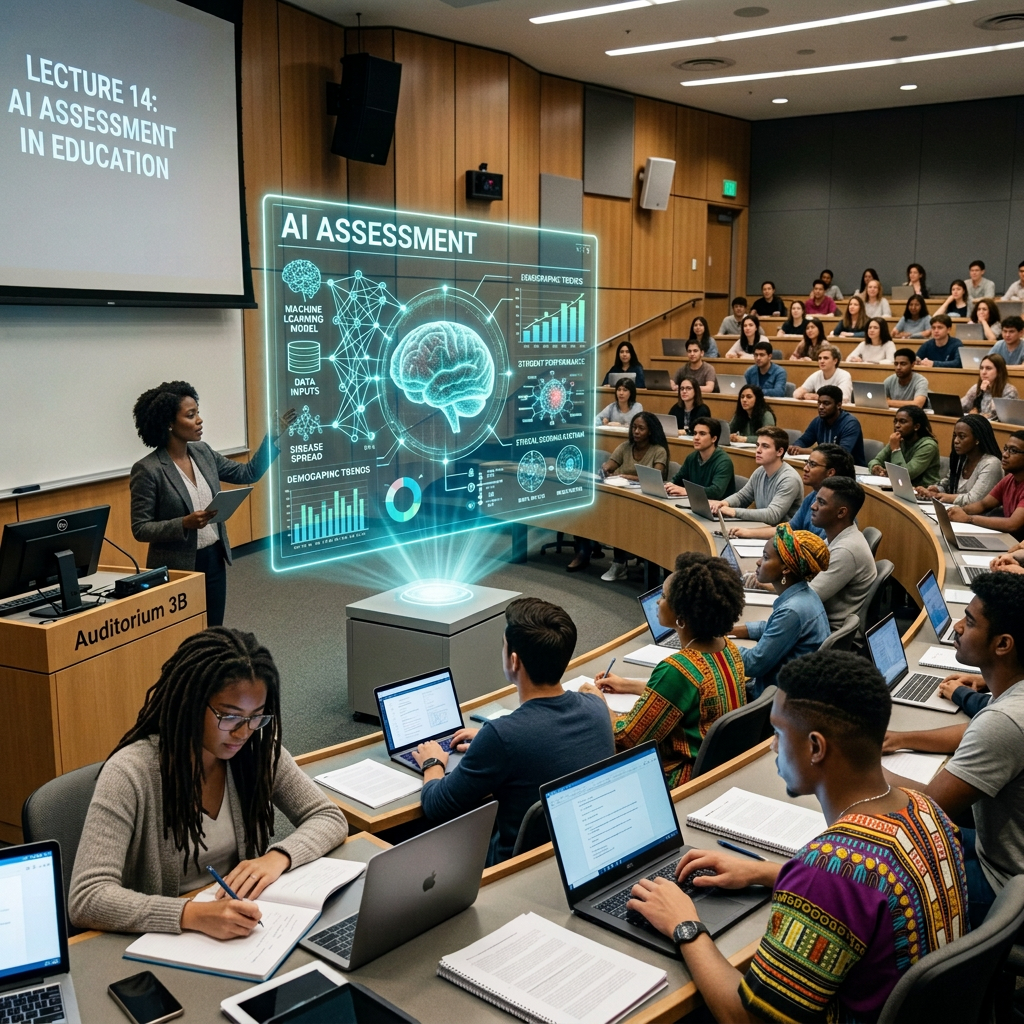
Professor giving lecture on AI applications in healthcare with holographic display and attentive students with laptops

Re-imagining Critical Thinking in Higher Education in the Age of Artificial Intelligence (Part 4)

By Dr. Gilbert A. Ang’ana

Did you miss the initial parts of this article series? Find Part 1 here, Part 2 here, and Part 3 here. This article is Part 4 of this series on “Re-imagining Critical Thinking in Higher Education in the Age of Artificial Intelligence”. Follow me for details of all the parts.

Universities Must Rethink Assessment Before Artificial Intelligence Redefines Learning

If artificial intelligence has exposed one major weakness within higher education, it is not the curriculum. It is assessment.

For generations, universities have relied on essays, examinations, research papers, laboratory reports, and dissertations as primary indicators of student learning. These assessment methods evolved within a world where demonstrating knowledge required students to independently locate information, organise arguments, synthesise evidence, and communicate their reasoning. The finished assignment served as a reasonably reliable proxy for the intellectual processes that produced it. Although imperfect, these approaches reflected an educational environment in which access to information was limited and the production of coherent academic work required substantial individual cognitive effort.

Artificial intelligence has fundamentally changed this assumption. Today, many conventional university assessments can be completed, at least in draft form, within minutes using generative AI. Essays can be generated instantly. Literature reviews can be synthesised. Computer code can be produced with remarkable speed and accuracy. Statistical analyses can be interpreted by AI-assisted software. Even policy briefs, reflective summaries, and research proposals can be drafted with increasing precision. Consequently, the educational challenge is no longer whether students possess the technical ability to use AI. That reality is already here. The challenge is whether existing assessment models continue to measure the intellectual capabilities universities claim to develop.

This moment requires universities to confront an uncomfortable but necessary truth. The AI revolution has not rendered higher education obsolete; it has rendered many traditional assessment practices insufficient.

The response should not be a return to handwritten examinations or blanket prohibitions on AI. Such measures may offer temporary reassurance but fail to address the deeper issue. Artificial intelligence is now part of professional practice across law, medicine, engineering, education, business, journalism, architecture, public administration, and scientific research. Universities should therefore prepare students to work responsibly with AI rather than pretend it does not exist. The central policy challenge is designing assessments in which the value lies not in producing answers but in demonstrating judgment, reasoning, creativity, ethical reflection, and contextual understanding.

Educational research has long argued that assessment shapes learning more powerfully than curriculum itself. John Biggs’ theory of constructive alignment emphasises that students organise their learning around what is assessed rather than what is merely taught (Biggs & Tang, 2011). If assessment rewards memorisation, students memorise. If it rewards reproduction, students reproduce. If it rewards critical inquiry, collaboration, reflection, and innovation, students gradually develop those capabilities. Assessment therefore sends a powerful message about what universities truly value. Artificial intelligence makes this insight more important than ever.

Rather than asking whether AI should be permitted in assessment, universities should begin by asking a more fundamental question: What forms of assessment best reveal human thinking in an AI-mediated world?

The answer lies in shifting from assessing products to assessing intellectual processes. One promising approach is the expanded use of oral examinations and oral defences. Long established within doctoral education, oral assessment requires students to explain, justify, defend, and extend their reasoning in real time. It becomes immediately evident whether learners genuinely understand the arguments they present, can respond to unfamiliar questions, and can integrate evidence under conditions of uncertainty. Artificial intelligence may assist students in preparation, but it cannot substitute for authentic intellectual engagement during scholarly dialogue. Research consistently suggests that oral assessment enhances conceptual understanding, communication skills, and higher-order reasoning while reducing opportunities for academic misconduct (Joughin, 2010).

Similarly, authentic assessment offers an increasingly relevant framework for AI-era universities. Authentic assessments require students to apply knowledge within realistic professional contexts rather than reproduce information in artificial academic settings (Villarroel et al., 2018). Instead of writing generic essays, students might develop public policy recommendations for local governments, design engineering solutions for community challenges, create business innovation strategies for emerging enterprises, prepare environmental impact assessments, or analyse complex healthcare cases. Such assessments value the quality of reasoning, stakeholder engagement, ethical decision-making, and contextual application over the production of text alone.

Policy simulations and scenario-based learning similarly cultivate capacities that artificial intelligence cannot independently replicate. Students confronted with evolving crises, whether climate emergencies, constitutional disputes, organisational failures, public health outbreaks, or diplomatic negotiations, must make decisions using incomplete information, competing priorities, and uncertain outcomes. These environments require judgment rather than information retrieval. They reveal how learners think rather than merely what they know. Higher education should also increasingly embrace live problem-solving assessments. These require students to analyse unfamiliar problems under supervised conditions, articulate their reasoning aloud, collaborate with peers, and adapt their thinking as new evidence emerges. Such assessments reflect the realities of contemporary professional practice, where success depends less on recalling predetermined answers than on responding thoughtfully to novel situations.

Another promising direction involves expanding the use of capstone projects that integrate knowledge across disciplines while addressing genuine societal challenges. Capstone experiences require sustained inquiry, collaboration, stakeholder engagement, iterative learning, and reflective practice over extended periods. Because they unfold through multiple stages involving supervision, peer feedback, field engagement, and revision, they make the learning journey itself visible rather than focusing exclusively on the final product. Portfolio assessment similarly deserves renewed attention. Rather than evaluating isolated assignments, portfolios document students’ intellectual growth over time through collections of projects, reflections, presentations, research outputs, creative work, and evidence of professional development. Properly designed portfolios encourage learners to demonstrate progression, integrate feedback, and critically reflect upon their own development. They also mirror lifelong learning practices increasingly expected within rapidly evolving professions.

One of the most underutilised yet powerful assessment approaches remains the reflective journal. Reflection is frequently misunderstood as a personal narrative rather than a rigorous intellectual exercise. In reality, structured reflective practice requires learners to evaluate decisions, analyse assumptions, identify limitations, integrate theory with experience, and plan future improvement. Donald Schön’s work on the reflective practitioner demonstrated decades ago that professional expertise develops not merely through experience itself but through disciplined reflection upon experience (Schön, 1983). In the AI era, reflective writing becomes even more valuable because it reveals how students interpret, question, and learn from interactions with intelligent technologies. Universities should also expand community-engaged learning and project-based assessment. Working with local communities, government agencies, civil society organisations, schools, hospitals, industries, and entrepreneurs exposes students to complex realities where problems rarely have single correct answers. Community-based assessment requires empathy, collaboration, ethical reasoning, contextual awareness, and adaptive problem-solving, qualities that remain deeply human despite rapid technological advancement.

Equally important is the growing need for interdisciplinary challenge-based learning. Artificial intelligence increasingly operates across disciplinary boundaries, affecting law, medicine, engineering, agriculture, education, economics, environmental science, theology, and public policy simultaneously. Universities should therefore create opportunities for students from different disciplines to collaborate on solving complex societal challenges. Such experiences cultivate systems thinking, communication, negotiation, and intellectual flexibility, competencies consistently identified by the OECD, UNESCO, and the World Economic Forum as essential for future graduates.

These recommendations do not imply abandoning essays altogether. Writing remains one of the most powerful vehicles for developing critical thought. Rather, essays should increasingly become one component within richer ecosystems of assessment that also evaluate oral reasoning, collaborative inquiry, ethical judgment, creativity, reflection, and practical problem-solving. The objective is not to eliminate traditional assessment but to rebalance it toward forms of evidence that more accurately capture human intellectual capability in an AI-enabled world.

The universities that thrive in the coming decades will not be those that most effectively police artificial intelligence. They will be those that most effectively redesign assessment around the capacities artificial intelligence cannot replace.

Ultimately, assessment reform is not about preserving academic integrity alone. It is about preserving intellectual integrity, the commitment to ensuring that every graduate has genuinely developed the habits of mind that higher education exists to cultivate.

Faculty Need AI Pedagogical Literacy, Not Just Digital Literacy

Artificial intelligence has generated widespread speculation about the future of academic work. Headlines frequently ask whether AI will replace lecturers, automate teaching, or render universities obsolete. Such questions are understandable but fundamentally misplaced. Throughout history, transformative technologies have consistently altered professional roles without eliminating the need for human expertise. Artificial intelligence is unlikely to replace university educators. It is, however, profoundly changing what it means to be one.

The future of higher education will depend less on whether lecturers can use artificial intelligence and more on whether they can teach students how to think critically in partnership with it.

This distinction marks one of the most important yet least discussed dimensions of AI policy in higher education. Across many universities, considerable attention has been devoted to helping faculty become digitally competent. Workshops increasingly introduce lecturers to generative AI platforms, automated marking tools, adaptive learning systems, AI-assisted research software, and digital content creation. While these initiatives are valuable, digital competence alone is insufficient. Knowing how to operate AI technologies is fundamentally different from understanding how AI reshapes learning, cognition, assessment, ethics, and intellectual development.

Universities therefore need to move beyond digital literacy towards what might be termed AI pedagogical literacy.

AI pedagogical literacy refers to educators’ capacity to integrate artificial intelligence into teaching in ways that strengthen rather than weaken learning. It requires understanding not only how AI functions technically but also how it influences cognitive development, student motivation, assessment validity, disciplinary knowledge, ethical reasoning, and academic integrity. Most importantly, it requires lecturers to redesign educational experiences so that AI becomes a catalyst for deeper inquiry rather than a shortcut around intellectual effort. This transformation fundamentally redefines the educator’s role. For centuries, lecturers have been regarded primarily as transmitters of disciplinary knowledge. Although this conception has long been challenged by contemporary educational theory, remnants of the transmission model remain evident within many university classrooms. Artificial intelligence accelerates the decline of this traditional role because students can now access information, summaries, examples, and even personalised tutoring almost instantly through intelligent systems. Information delivery is no longer the distinctive contribution of the university lecturer.

The educator’s comparative advantage now lies elsewhere. Lecturers become architects of learning rather than distributors of information. They become designers of intellectual experiences. Facilitators of inquiry. Mentors of critical reasoning. Cultivators of ethical judgment and developers of professional identity.

These responsibilities cannot be automated because they depend upon relational engagement, disciplinary wisdom, contextual understanding, and moral leadership. This shift also requires educators to model critical engagement with AI itself. Students should observe lecturers questioning AI-generated outputs, identifying inaccuracies, recognising algorithmic bias, evaluating evidence, acknowledging uncertainty, and demonstrating intellectual humility. In doing so, faculty communicate an essential lesson: artificial intelligence is an extraordinarily powerful cognitive partner, but it is not an unquestionable authority.

Equally important is the need for educators to explicitly teach students how to use AI responsibly. Universities should no longer assume that digital natives automatically possess AI literacy. In reality, many students know how to generate outputs but lack understanding of prompt design, verification strategies, source evaluation, ethical disclosure, bias detection, privacy implications, and responsible academic use. Faculty therefore become guides in helping students distinguish between productive AI collaboration and passive dependence. Professional development consequently becomes a strategic institutional priority rather than an optional activity. Universities should invest in sustained programmes enabling lecturers to understand cognitive science, assessment redesign, AI ethics, disciplinary applications of generative AI, learning analytics, and evidence-based pedagogical innovation. One-off workshops introducing AI tools will not be sufficient. Faculty require continuous opportunities to experiment, reflect, collaborate, and evaluate emerging educational practices within their own disciplines.

Institutional leadership has a corresponding responsibility. Universities should establish communities of practice where educators share successful AI-enabled teaching approaches, discuss ethical dilemmas, evaluate new technologies, and collectively develop institutional standards. Such collaborative learning cultures reduce uncertainty while encouraging innovation grounded in educational research rather than technological enthusiasm alone. AI pedagogical literacy must also become a component of academic quality assurance. Teaching excellence frameworks should increasingly recognise educators who successfully integrate AI while strengthening higher-order thinking, reflective practice, interdisciplinary collaboration, and authentic learning. Teaching awards, curriculum review processes, and educational leadership programmes should all acknowledge the growing importance of AI-informed pedagogy. Perhaps most important, faculty themselves must embrace a renewed understanding of expertise. In an era where students can instantly retrieve information, academic authority no longer rests primarily upon possessing knowledge unavailable elsewhere. Instead, authority increasingly derives from helping learners make sense of complexity, navigate ambiguity, exercise ethical judgment, connect theory with practice, and cultivate intellectual character.

Artificial intelligence therefore does not diminish the importance of university educators. It elevates it. The lecturer of the future will not be defined by the quantity of information they can deliver more effectively than an algorithm. They will be distinguished by their capacity to cultivate the qualities that no algorithm can teach independently: wisdom, discernment, curiosity, courage, integrity, empathy, intellectual humility, and the disciplined habit of critical inquiry. The universities that flourish in the age of artificial intelligence will not simply invest in smarter technologies. They will invest in smarter pedagogies and in educators capable of ensuring that every technological advance is matched by an equally ambitious investment in human intellectual development.

For if artificial intelligence is transforming the future of learning, it is the university lecturer who must ensure that learning remains profoundly and unapologetically human.

Thank you for following this series of articles in this critical conversation to here. The last bonus part 5 of the article, I will be sharing “Eight Policy Priorities for Re-imagining Critical Thinking in the Age of Artificial Intelligence”

Author

Dr. Gilbert A. Ang’ana is the Dean of School of Leadership, Business, and Technology at Pan Africa Christian (PAC) University whose research focus is on values-based and collaborative leadership and governance in Africa. He is a leadership, governance and policy consultant, teacher and coach and the Founder of Accent Leadership Group and Accent Global Initiative (Think Tank)

Map of Africa with glowing digital and technology icons including a central brain representing AI

Re-imagining Critical Thinking in Higher Education in the Age of Artificial Intelligence (Part 3)

Why Re-imagining Critical Thinking Matters Even More for Africa

By Dr. Gilbert A. Ang’ana

Did you miss Part 1 of this article series? Find it here and Part 2 here. This article is part 3 of this series on “Re-imagining Critical Thinking in Higher Education in the Age of Artificial Intelligence” . Follow me for details of all the parts.

While the debate surrounding artificial intelligence has largely been shaped by universities and technology companies in North America, Europe, and parts of Asia, its implications for Africa (Africa here is used as a persona to represent Africans) are arguably even more profound. The continent is in one of the most consequential periods in its history. It possesses the world’s youngest population, one of the fastest-growing digital economies, expanding internet connectivity, vibrant entrepreneurial ecosystems, and increasing investments in digital infrastructure. At the same time, Africa continues to confront complex development challenges requiring innovative, contextually relevant, and ethically grounded solutions. Artificial intelligence therefore provides an extraordinary opportunity and significant vulnerability.

The future of Africa will not be determined by whether the continent adopts artificial intelligence. Rather, it will depend on whether Africa develops the human capital capable of governing, adapting, innovating, and critically interrogating AI in ways that advance its own development priorities. The question is not whether Africa is using AI. The more important question is whether Africa will become a producer of AI-enabled knowledge and innovation or remain primarily a consumer of technologies designed elsewhere. This distinction should shape higher education policy across the continent. Africa has often experienced technological revolutions as an adopter rather than an architect. From industrial manufacturing and pharmaceutical production to advanced computing and digital platforms, much of the continent’s technological engagement has historically involved adapting innovations developed in other regions. Artificial intelligence presents an opportunity to rewrite this narrative. Unlike previous industrial revolutions that depended heavily on physical infrastructure and capital-intensive manufacturing, the AI revolution is driven substantially by knowledge, talent, creativity, entrepreneurship, research, data, and innovation ecosystems. These are precisely the assets that universities are uniquely positioned to develop.

Yet this opportunity can only be realised if higher education prioritises intellectual capability alongside technological competence. Producing graduates who know how to use AI applications is important, but it is insufficient. Africa requires graduates capable of designing AI systems responsive to African realities, interrogating algorithmic bias, addressing ethical challenges in multilingual and multicultural contexts, developing indigenous datasets, strengthening digital sovereignty, and applying AI to improve healthcare, agriculture, education, climate resilience, public administration, manufacturing, and governance. Such capabilities depend fundamentally on critical thinking rather than technological literacy alone. This imperative aligns closely with the aspirations articulated in the African Union’s Agenda 2063, the continent’s strategic framework for inclusive and sustainable development. Agenda 2063 envisions “The Africa We Want” as prosperous, integrated, peaceful, well-governed, and driven by its own citizens. Aspiration 1 calls for inclusive growth and sustainable development founded upon science, technology, innovation, and human capital. Aspiration 6 further emphasises that Africa’s development must be people-driven, particularly through investments in women and youth (African Union Commission, 2015). These aspirations recognise a fundamental truth: technology does not transform societies independently. People do.

Artificial intelligence should therefore be understood not as a technological issue but as a human development issue.

Every aspiration contained within Agenda 2063, from improving public health and strengthening democratic governance to accelerating industrialisation and enhancing educational quality, ultimately depends on citizens capable of analysing evidence, solving complex problems, collaborating across disciplines, exercising ethical leadership, and adapting continuously to changing circumstances. These capacities emerge from educational systems that cultivate inquiry rather than conformity, reasoning rather than memorisation, and innovation rather than imitation. Africa’s demographic profile makes this challenge especially urgent. According to the United Nations, the continent’s population is projected to double by 2050, with young people constituting the largest labour force in the world. This “youth dividend” has the potential to become Africa’s greatest comparative advantage, or its greatest missed opportunity. A youthful population alone does not generate economic transformation. It must be accompanied by high-quality education capable of producing adaptable, entrepreneurial, and critically minded graduates who can create employment rather than simply seek it.

Artificial intelligence has the potential to significantly accelerate this transformation. AI is already supporting smart agriculture for smallholder farmers, expanding access to healthcare through diagnostic tools, improving educational access in underserved communities, strengthen disaster preparedness, optimise transport systems, enhance financial inclusion, and improve public service delivery. Across Africa, innovators are already applying AI to local challenges, from disease surveillance and climate-smart agriculture to language technologies and financial technologies tailored to African markets. These developments demonstrate that Africa need not remain a passive recipient of global AI innovations.

However, there is also a risk that the continent becomes increasingly dependent on imported AI systems trained predominantly on data, languages, cultural assumptions, and governance frameworks originating outside Africa. Such dependence raises concerns regarding algorithmic bias, cultural representation, data governance, privacy, digital sovereignty, and economic inclusion. AI systems trained primarily on non-African datasets may fail to adequately represent African realities, resulting in technologies that reinforce rather than reduce existing inequalities. Universities therefore have a critical responsibility to cultivate graduates capable not only of deploying AI but also of questioning whose knowledge AI represents, whose values it embeds, whose interests it serves, and whose voices remain absent. This challenge extends beyond technology into governance itself. Across the continent, governments increasingly rely upon data-driven decision-making, digital public services, predictive analytics, and AI-supported policy tools. While these technologies promise greater efficiency, they also require public leaders capable of exercising independent judgment.

Algorithms may identify patterns, but they cannot determine justice. They may optimise resource allocation, but they cannot decide what constitutes fairness. They may generate predictions, but they cannot replace democratic accountability. The future of African governance therefore depends not on replacing human decision-makers with intelligent systems but on producing leaders capable of governing intelligently alongside them. Higher education occupies the centre of this transformation. Universities educate the engineers who will build digital infrastructure, the lawyers who will regulate AI, the teachers who will prepare future generations, the health professionals who will integrate AI into clinical practice, the entrepreneurs who will establish technology enterprises, and the policymakers who will shape national innovation ecosystems. If universities fail to protect critical thinking while embracing artificial intelligence, Africa risks producing technically proficient graduates who possess advanced digital skills but insufficient intellectual independence to lead complex societies.

Re-imagining critical thinking is therefore not a conservative attempt to preserve traditional education. It is a strategic investment in Africa’s long-term competitiveness within the global knowledge economy. Nations that combine technological capability with human intellectual excellence will lead the AI era. Those that prioritise technological adoption without equivalent investment in critical reasoning may remain dependent upon innovations produced elsewhere. The defining question for African universities is no longer whether artificial intelligence is used in higher education. It is whether higher education can produce graduates capable of ensuring that artificial intelligence serves Africa’s development rather than shaping Africa’s future according to priorities defined beyond the continent.

Kenya’s Artificial Intelligence Strategy and the Future of Higher Education

Among African countries, Kenya is one of the continent’s most ambitious proponents of digital transformation. Often referred to as the “Silicon Savannah,” Kenya has built an international reputation for technological innovation through pioneering developments such as mobile money, digital entrepreneurship, financial technology, and expanding innovation ecosystems. The launch of the Kenya National Artificial Intelligence Strategy 2025–2030 signals the country’s intention to position itself as a regional leader in responsible AI adoption, research, innovation, and digital economic transformation (Ministry of Information, Communications and the Digital Economy [MICDE], 2025). The strategy represents a significant milestone in Kenya’s digital development agenda. It recognises artificial intelligence as an enabling technology capable of transforming sectors including agriculture, healthcare, manufacturing, education, public administration, climate resilience, and financial services. Importantly, it emphasises responsible AI governance, research and innovation, digital infrastructure, talent development, and public-private partnerships as essential pillars of national competitiveness. The strategy also aligns with Kenya’s broader Digital Superhighway initiative and Bottom-Up Economic Transformation Agenda, reflecting an understanding that future economic growth will increasingly depend upon knowledge-intensive industries and digital capabilities. Yet the success of this strategy ultimately depends upon higher education institutions more than others.

National AI strategies do not implement themselves. They require researchers capable of advancing scientific knowledge, graduates able to innovate responsibly, policymakers who understand both technology and ethics, educators who can prepare future generations, and entrepreneurs capable of translating research into societal impact. In other words, the effectiveness of Kenya’s AI strategy will depend not simply on digital infrastructure or technological investment but on the quality of higher education. This reality invites a broader policy conversation. Much attention has been devoted to ensuring that universities integrate artificial intelligence into teaching, research, and administration. Comparatively less attention has been given to whether universities are redesigning learning itself to ensure that graduates retain the cognitive capacities most needed in an AI-enabled economy. AI literacy is becoming increasingly important. However, AI literacy without critical thinking risks producing graduates who can operate intelligent technologies without fully understanding their limitations, assumptions, biases, or ethical implications.

Kenya’s Competency-Based Curriculum (CBC) offers an important point of reflection in this regard. The CBC seeks to shift education away from rote memorisation towards competencies such as critical thinking, communication, creativity, citizenship, collaboration, digital literacy, and problem-solving. These aspirations closely mirror the competencies identified globally as essential for the future workforce. However, unless universities intentionally build upon these foundations, there is a danger that students experience a discontinuity between competency-oriented school education and higher education assessment systems that continue to reward information reproduction rather than analytical reasoning. The emergence of generative AI makes this alignment even more important. If learners are encouraged to develop critical thinking throughout basic education only to encounter university assessment models that AI can complete with minimal human reasoning, the intended benefits of competency-based education may be significantly weakened. Universities therefore need not only adopt AI technologies but also reconsider how they evaluate learning outcomes in an era where information generation is increasingly automated.

The Commission for University Education (CUE) has an equally significant role to play. As Kenya’s quality assurance and regulatory body for university education, CUE has traditionally focused on programme accreditation, academic standards, institutional governance, and quality enhancement. Artificial intelligence introduces new dimensions that extend beyond these traditional functions. Future quality assurance frameworks should increasingly evaluate whether programmes deliberately cultivate higher-order cognitive competencies, ethical reasoning, interdisciplinary problem-solving, digital responsibility, and AI literacy alongside disciplinary knowledge. This does not necessarily require entirely new accreditation systems. Rather, it calls for an evolution in how educational quality is defined. In the AI era, excellent programmes will not simply demonstrate that students acquire knowledge; they will demonstrate that graduates can critically interrogate knowledge produced by both humans and machines.

Kenya’s expanding investment in research also presents significant opportunities. Through institutions such as the National Research Fund (NRF), the country has sought to strengthen research capacity, innovation, and knowledge production across universities. Artificial intelligence offers unprecedented opportunities to accelerate scientific discovery, analyse complex datasets, support interdisciplinary collaboration, and improve research productivity. However, these benefits must be accompanied by equally robust investments in research integrity, ethical AI governance, data stewardship, reproducibility, and critical methodological training. AI can accelerate research, but it cannot replace scientific judgment. Similarly, ongoing reforms within the Technical and Vocational Education and Training (TVET) sector recognise that future employment increasingly demands digital competencies alongside technical skills. Yet TVET institutions, like universities, must avoid equating digital competence with intellectual competence. Graduates entering advanced manufacturing, engineering, healthcare technologies, logistics, agriculture, and digital industries will require continuous problem-solving abilities because AI itself will continue evolving throughout their careers. The most valuable workforce will therefore be one capable of learning, adapting, questioning, and innovating rather than merely operating existing technologies.

Perhaps the greatest policy opportunity lies in positioning Kenya’s universities as continental leaders in responsible AI education. Rather than competing primarily through technological infrastructure, Kenyan universities could distinguish themselves by pioneering educational models that integrate AI with critical thinking, ethical leadership, interdisciplinary learning, African knowledge systems, and innovation for sustainable development. Such an approach would strengthen Kenya’s global competitiveness while contributing meaningfully to Africa’s broader knowledge economy. Importantly, this requires a shift in institutional mindset. Artificial intelligence should not be viewed as an additional subject to be incorporated into existing curricula. Instead, it should catalyse rethinking the broader purposes of university education. Every discipline, from medicine and engineering to law, education, business, agriculture, theology, and the humanities, must now ask the same fundamental question:

what uniquely human capabilities should graduates possess that artificial intelligence cannot replace?

The answer to that question should shape curriculum design, assessment, faculty development, research priorities, accreditation standards, and national higher education policy. Kenya has already demonstrated remarkable leadership in embracing digital innovation. The next phase of leadership will depend not on how rapidly universities adopt artificial intelligence, but on how effectively they protect and strengthen the human capacities that will determine whether artificial intelligence advances national development responsibly, ethically, and inclusively. In this respect, the country’s AI strategy should be understood not only as a technology policy but also as an opportunity to renew the fundamental mission of higher education itself.

Watch out for Part 4 of the article, which will explore how Universities Must Rethink Assessment as Artificial Intelligence Redefines Learning.

Author

Dr. Gilbert A. Ang’ana is the Dean of School of Leadership, Business, and Technology at Pan Africa Christian (PAC) University whose research focus is on values-based and collaborative leadership and governance in Africa. He is a leadership, governance and policy consultant, teacher and coach and the Founder of Accent Leadership Group and Accent Global Initiative (Think Tank)
Silhouette of student walking near illuminated digital brain display on campus at twilight

Re-imagining Critical Thinking in Higher Education in the Age of Artificial Intelligence (Part 2)

By Dr. Gilbert A. Ang’ana

Did you miss Part 1 of this article series? Find it here. This article is part 2 of 4 of the series. Follow me for details of all the parts.

Artificial Intelligence Is Changing the Nature of Learning, Not Just the Tools of Learning

The conversation about artificial intelligence in higher education has largely focused on what students can do with AI. A far more important question, however, is what AI is doing to students’ thinking. This distinction is critical because education is fundamentally concerned with cognitive development rather than task completion. Universities do not exist to help students complete assignments efficiently; they exist to cultivate the intellectual capabilities that enable graduates to solve problems independently, make sound judgments, adapt to uncertainty, and generate new knowledge, especially at postgraduate level throughout their lives. Artificial intelligence therefore demands more than a technological response; it demands a re-examination of how human learning actually occurs.

Learning is often misunderstood as the accumulation of information. Contemporary research in cognitive psychology, neuroscience, and the learning sciences paints a very different picture. Learning is an active biological and cognitive process in which the brain constructs, reorganizes, and strengthens neural pathways through sustained engagement with ideas. Knowledge is not transferred into the mind like files copied onto a computer; it is actively built through questioning, reasoning, reflection, feedback, and repeated application. This process requires mental effort. Indeed, the very struggle associated with learning is not a sign of failure but evidence that meaningful learning is taking place.

One of the most recent concepts explaining this phenomenon is what Robert and Elizabeth Bjork describe as “desirable difficulties.” Their research demonstrates that learning strategies requiring greater cognitive effort often produce stronger long-term understanding than approaches that make learning appear easy (Bjork & Bjork, 2011). Activities such as recalling information from memory, solving unfamiliar problems, explaining concepts to others, and applying knowledge in new contexts create productive challenges that strengthen learning. Students frequently perceive these activities as difficult because they demand sustained mental engagement. Yet neuroscience suggests that such effort promotes learning by reinforcing neural connections associated with memory retrieval and conceptual understanding.

This insight has profound implications for artificial intelligence. AI significantly reduces many of the desirable difficulties through which expertise develops. A student struggling to synthesize competing academic perspectives can now obtain a coherent synthesis within seconds. A learner wrestling with the structure of an argument can request an instantly polished essay. Programming errors can be corrected automatically. Mathematical solutions can be generated without requiring students to identify underlying principles. While these capabilities undoubtedly improve efficiency, they may also limit opportunities for the cognitive effort that transforms novice learners into independent thinkers.

The same argument emerges from another principle in educational psychology: retrieval practice. Brown, Roediger, and McDaniel (2014), drawing upon decades of empirical research, demonstrate that actively retrieving knowledge from memory produces substantially deeper learning than repeatedly reviewing information. The act of recalling concepts, solving problems without immediate assistance, and reconstructing knowledge strengthens long-term retention while improving learners’ ability to transfer understanding to unfamiliar situations. Put simply, students learn more effectively when they are required to think rather than just recognize information.

Artificial intelligence changes this equation. When answers become immediately available, learners may bypass retrieval altogether. Instead of reconstructing knowledge through deliberate reasoning, they increasingly consult AI systems capable of generating persuasive responses almost instantaneously. The immediate result is greater efficiency. The long-term consequence, however, may be weaker conceptual understanding because the cognitive processes responsible for strengthening learning are exercised less frequently.

Closely related is the concept of metacognition, the capacity to think about one’s own thinking. Effective learners continuously monitor what they know, identify gaps in understanding, evaluate the quality of their reasoning, and regulate their learning strategies accordingly. Metacognition enables individuals to distinguish genuine understanding from superficial familiarity. It is widely regarded as one of the strongest predictors of academic success and lifelong learning. Generative AI presents both opportunities and risks for metacognitive development. Used well, AI can support reflection by providing alternative explanations, generating feedback, or exposing learners to competing viewpoints. Used uncritically, however, it can create an illusion of understanding. Students may mistake AI-generated explanations for personal comprehension simply because the output appears coherent and convincing. They may recognize an argument without ever constructing it themselves. This distinction is subtle but fundamental.

Understanding produced by external systems should never be confused with understanding developed through internal cognitive effort.

The work of educational psychologist John Sweller further illuminates this challenge. Sweller’s Cognitive Load Theory argues that human working memory possesses limited capacity and that effective instructional design should reduce unnecessary mental demands while preserving the cognitive effort essential for learning (Sweller, 1988). Importantly, Sweller does not advocate eliminating intellectual challenge altogether. Rather, he distinguishes between cognitive load that interferes with learning and cognitive effort that promotes it. Artificial intelligence has enormous potential to reduce unproductive cognitive burdens. For example, by automating repetitive administrative tasks, summarizing large volumes of information, or providing immediate formative feedback. These applications can free learners to focus on higher-order reasoning. Problems arise, however, when AI eliminates the productive cognitive work that students themselves must perform to develop expertise.

Educational researchers Paul Kirschner and Carl Hendrick have similarly cautioned against misconceptions about learning that prioritise convenience over cognition. Their work consistently demonstrates that expertise develops through deliberate practice, sustained attention, feedback, and repeated engagement with increasingly complex problems rather than through passive exposure to information (Kirschner & Hendrick, 2020). Learning, they argue, cannot be outsourced. Technologies may support it, accelerate aspects of it, or enrich it, but they cannot replace the biological and cognitive processes through which understanding is constructed.

Perhaps the most directly relevant concept for the AI era is cognitive offloading. Risko and Gilbert (2016) define cognitive offloading as the use of physical actions or external technologies to reduce the mental effort required for cognitive tasks. Humans have always offloaded aspects of cognition. We write notes instead of memorizing everything, use calculators instead of performing lengthy arithmetic mentally, and rely on GPS rather than memorizing complex routes. These practices are not inherently problematic. Indeed, they often enhance productivity and allow cognitive resources to be redirected toward more sophisticated tasks. The challenge arises when cognitive offloading replaces rather than complements higher-order thinking. Artificial intelligence differs fundamentally from earlier technologies because it increasingly performs tasks involving analysis, evaluation, synthesis, writing, reasoning, and creative generation, functions that lie at the heart of university education.

The critical question is therefore no longer whether students should use external tools. Rather, it is which aspects of cognition should remain fundamentally human.

Recent analyses by the Organisation for Economic Co-operation and Development (OECD) reinforce this concern. The OECD argues that generative AI should not be viewed primarily as a substitute for human intelligence but as a technology requiring education systems to place greater emphasis on analytical thinking, critical reasoning, ethical judgment, collaboration, and creativity, precisely because these uniquely human competencies become more valuable as AI capabilities expand (OECD, 2024). The future graduate will not compete with artificial intelligence by memorizing more information than machines. Graduates will distinguish themselves through their capacity to evaluate AI outputs, challenge assumptions, navigate ambiguity, integrate diverse perspectives, and make decisions grounded in ethical and contextual understanding.

The implications are profound. Artificial intelligence is not just changing how students learn; it is changing what it means to learn. The challenge for higher education is therefore not preserving traditional teaching methods but ensuring that technological efficiency does not come at the expense of intellectual development. Universities must intentionally design learning experiences that preserve the cognitive effort necessary for critical thinking while harnessing AI’s extraordinary capacity to enhance teaching and research. The objective should not be frictionless learning. It should be meaningful learning.

The New Crisis Nobody Is Talking About – The Outsourcing of Human Thinking

Public debate about artificial intelligence in higher education has been dominated by one issue: plagiarism. Universities have invested heavily in AI detection software, revised academic integrity policies, redesigned assessment regulations, and debated whether students should be permitted to use generative AI in coursework. While these discussions are understandable, they may also be distracting institutions from a much deeper educational crisis.

The greatest threat posed by artificial intelligence is not that students will submit work they did not write. It is that they may gradually stop doing the thinking that universities exist to develop.

This distinction fundamentally changes the nature of the debate. Academic integrity has traditionally focused on authorship. Did the student produce the submitted work? Was the assignment completed honestly? Were appropriate sources acknowledged? These remain essential questions. Yet in the age of artificial intelligence, they are no longer sufficient. A student may fully disclose AI use, comply with institutional guidelines, submit technically original work, and still engage in remarkably little independent thinking. The assignment may satisfy formal requirements while failing to achieve the educational purpose for which it was designed. This possibility exposes a critical weakness in many current university policies. Institutions are concentrating on protecting the originality of academic products while paying comparatively little attention to protecting the originality of intellectual processes. Yet universities exist primarily to cultivate the latter.

Original writing is not the same as original thinking.

An essay can be original because it has never previously existed, while the intellectual work underpinning it has been largely performed by artificial intelligence. Conversely, a student may produce an entirely authentic argument that builds thoughtfully upon existing scholarship, demonstrating deep reasoning, careful judgment, and genuine intellectual growth. The educational value lies not simply in the finished document but in the quality of thinking that produced it. This distinction is perhaps the most important educational question raised by generative AI. Higher education has assessed written assignments as proxies for cognitive development. Essays, dissertations, laboratory reports, policy analyses, and research projects were never valuable simply because they produced text. They were valuable because the process of constructing them required students to analyse evidence, compare competing ideas, organize arguments, reflect critically, solve problems, and communicate reasoning. Writing served as evidence that thinking had occurred.

Artificial intelligence disrupts this relationship. Today, it is increasingly possible to generate sophisticated academic products without engaging fully in the intellectual processes they were designed to measure. The educational risk therefore lies not in the technology itself but in confusing the production of knowledge artifacts with the development of human understanding. This phenomenon might be described as cognitive outsourcing, the progressive transfer of higher-order intellectual responsibilities from human learners to intelligent systems. Unlike traditional cognitive offloading, which largely involved routine memory or computational tasks, cognitive outsourcing reaches into the very capacities that define university education: interpretation, synthesis, evaluation, critical reflection, creativity, and judgment.

The consequences may emerge gradually rather than dramatically. Students may become less comfortable grappling with ambiguity because AI rapidly supplies answers. They may invest less time evaluating competing arguments because AI conveniently synthesizes them. They may lose confidence in developing independent positions because machine-generated responses appear more articulate than their own early drafts. Over time, intellectual perseverance, the willingness to wrestle with difficult ideas may quietly decline. This concern finds support in broader research on expertise development. Experts differ from novices not because they possess more information alone, but because they have developed richer conceptual frameworks, stronger pattern recognition, more refined judgment, and greater capacity to navigate uncertainty. These qualities emerge through years of deliberate practice, reflection, feedback, and sustained engagement with complex problems. They cannot simply be downloaded or generated on demand.

Ironically, artificial intelligence makes independent thinking more valuable, not less.

As AI systems become increasingly capable of generating information, summarizing evidence, drafting reports, and automating routine analysis, human comparative advantage shifts toward those capacities machines cannot reliably replicate. Ethical reasoning. Contextual judgment. Intellectual humility. Curiosity. Moral imagination. The ability to ask questions no algorithm has been instructed to answer. The wisdom to know when evidence is insufficient. The courage to challenge consensus. These are not residual skills left over after technological progress. They are becoming the defining competencies of leadership in an AI-mediated world.

This has profound implications for universities across Africa. The continent’s greatest resource is not artificial intelligence itself but its people, the creativity, resilience, diversity, and intellectual potential of one of the world’s youngest populations. If higher education unintentionally encourages graduates to depend on AI for thinking rather than empowering them to think with AI, Africa risks becoming a consumer of algorithmic intelligence developed elsewhere rather than a producer of contextually grounded knowledge and innovation. The challenge is therefore much larger than regulating AI use in examinations or detecting machine-generated assignments. Universities must redesign educational systems around a more fundamental objective: ensuring that every encounter with artificial intelligence strengthens rather than substitutes the learner’s own reasoning.

The future will not belong to graduates who can just prompt AI more effectively than others. It will belong to those who can critically evaluate its outputs, identify its limitations, recognise its biases, integrate its insights with human experience, and exercise the wisdom to know when the machine is wrong. In that sense, the defining purpose of higher education has not changed. It has become even more important. The central question is no longer whether students are using artificial intelligence. The central question is whether artificial intelligence is still being used in ways that preserve, deepen, and ultimately expand humanity’s capacity to think.

Part 3 will explore why protecting critical thinking matters even more for Africa. Stay tuned and follow the conversation.

Author

Dr. Gilbert A. Ang’ana is the Dean of School of Leadership, Business, and Technology at Pan Africa Christian (PAC) University whose research focus is on values-based and collaborative leadership and governance in Africa. He is a leadership, governance and policy consultant, teacher and coach and the Founder of Accent Leadership Group and Accent Global Initiative (Think Tank)

Silhouette of student walking near illuminated digital brain display on campus at twilight

Re-imagining Critical Thinking in Higher Education in the Age of Artificial Intelligence

Why the Future of Higher Education Depends Not on Resisting AI, but on Re-imagining the Uniquely Human Capacities That AI Cannot Replace

By Dr. Gilbert A. Ang’ana

This article represents Part 1 of a 4-part series of perspectives I share on this topic

Throughout history, every major technological revolution has transformed the way human beings access, create, and share knowledge. The invention of the printing press democratized learning by making books widely available. The Industrial Revolution reshaped education to prepare citizens for an emerging economic order. The advent of computers accelerated information processing beyond human capacity, while the internet fundamentally changed how knowledge is stored, accessed, and exchanged across the globe. Each of these innovations altered the educational landscape, but none fundamentally challenged the very nature of human cognition in the way that artificial intelligence now does.

Generative Artificial Intelligence (AI) is not simply another technology. It represents a profound shift in the relationship between humans and knowledge itself. Unlike previous technologies that expanded human access to information, AI increasingly performs intellectual tasks that were once considered uniquely human. It can generate essays, summarize research papers, write software code, solve complex mathematical problems, create policy analyses, translate languages, produce artistic works, and engage in sophisticated dialogue within seconds. For the first time in history, humanity has developed machines capable of producing coherent knowledge artifacts rather than just storing or transmitting information.

This distinction is critical. Search engines such as Google revolutionized information retrieval by helping people locate existing knowledge. Generative AI goes a step further; it creates new content that resembles human reasoning, often making it difficult to distinguish between machine-generated and human-generated thought. While these systems do not “think” in the philosophical sense, their outputs increasingly simulate many aspects of human cognition, raising profound questions about learning, expertise, creativity, authorship, and intellectual development.

The implications for higher education are both extraordinary and unsettling. Universities have embraced technological innovations throughout their history because they enhanced teaching, research, and scholarly communication. Artificial intelligence undoubtedly offers similar opportunities. It can personalize learning, improve accessibility for students with diverse needs, automate routine administrative tasks, accelerate scientific discovery, support interdisciplinary research, and expand educational opportunities to previously underserved communities (UNESCO, 2023). Properly deployed, AI has the potential to become one of the most transformative educational tools ever created.

Yet beneath this optimism lies a far more fundamental challenge that has received comparatively little attention. The central question confronting higher education is no longer whether universities should adopt artificial intelligence; they inevitably have, should and will. Nor is the primary concern whether students will use AI to complete assignments. Those debates, while important, focus on symptoms rather than the underlying issue. The more profound question is this: what happens to human intellectual development when technologies increasingly perform the cognitive work that they were designed to cultivate?

This is not a question about technology. It is a question about the future purpose of higher education.

For centuries, universities have existed as institutions dedicated to cultivating minds rather than simply transmitting information. Their enduring value has never resided in possessing knowledge unavailable elsewhere. Universities flourished long before libraries became widespread because they nurtured habits of disciplined inquiry, logical reasoning, ethical reflection, and scholarly debate. As access to information expanded through books, journals, and later the internet, the university’s purpose did not diminish. Instead, its role became even more important: helping learners distinguish reliable knowledge from speculation, evidence from opinion, and wisdom from mere information.

Artificial intelligence now compels universities to revisit this foundational purpose.

The debate surrounding AI has, in many respects, been framed too narrowly. Discussions often centre on plagiarism detection, academic misconduct, assessment redesign, or the technical integration of AI tools into classrooms. While these are legitimate concerns, they overlook a more consequential risk: the gradual outsourcing of human cognition. If students increasingly rely on AI to analyse, synthesise, evaluate, and generate ideas, they may complete academic tasks more efficiently while simultaneously engaging less deeply in the intellectual processes through which expertise develops. The greatest threat posed by AI to higher education is therefore not academic dishonesty. It is the possibility that universities are inadvertently producing graduates who possess unprecedented access to knowledge yet lack the capacity to think independently about it.

This challenge extends far beyond the classroom. Around the world, democratic societies are confronting growing volumes of misinformation, algorithmic bias, synthetic media, and AI-generated content that blur the boundaries between truth and fabrication. Citizens are increasingly required to evaluate competing claims, verify sources, interpret evidence, and make informed judgments in environments characterised by uncertainty and information overload. In such a world, the competitive advantage of individuals and nations will not depend solely on access to artificial intelligence. It will depend on cultivating citizens capable of questioning artificial intelligence itself.

Consequently, the future of higher education should not be framed as a choice between embracing AI and protecting traditional educational practices. That is a false dichotomy. Artificial intelligence is now an irreversible feature of contemporary society and will continue transforming education, research, industry, healthcare, governance, and public life. The real challenge is ensuring that AI amplifies rather than replaces the uniquely human capacities upon which democratic societies, ethical leadership, scientific progress, and sustainable development ultimately depend.

Re-imagining critical thinking, therefore, is not an argument against artificial intelligence. It is the condition necessary for artificial intelligence to serve humanity responsibly.

The University Has Never Been About Information

To understand why re-imagining critical thinking has become such an urgent imperative, we must first revisit a more fundamental question that has quietly shaped higher education for centuries: What is a university actually for?

This question is surprisingly easy to overlook in an era obsessed with employability, technological disruption, university rankings, salaries, and digital transformation. Increasingly, higher education is evaluated through metrics that emphasise economic returns, research outputs, innovation ecosystems, and workforce readiness. These outcomes undoubtedly matter. Universities contribute significantly to national development, scientific discovery, technological innovation, and economic competitiveness. Yet reducing higher education to these functions alone risks overlooking its deeper intellectual and civic purpose.

The defining characteristic of a university has never been its ability to provide information. Information has always existed beyond university walls. Before the printing press, knowledge circulated through oral traditions, monasteries, and scholarly communities. The invention of print dramatically expanded access to learning. Public libraries further democratized knowledge. The internet subsequently made billions of pages of information accessible within seconds, fundamentally altering how societies learn. Search engines then organised this vast digital landscape, enabling individuals to retrieve information almost instantaneously.

If universities existed primarily to distribute information, they would have become obsolete long before the emergence of artificial intelligence.

Instead, universities endured because their purpose has always extended beyond information itself. Their enduring contribution lies in transforming information into understanding, understanding into judgment, and judgment into wise action. Universities cultivate the intellectual virtues that enable individuals not only to know more, but to think more carefully, question more deeply, and act more responsibly.

This philosophical understanding of higher education has deep historical roots. In The Idea of a University, first published in 1852, John Henry Newman argued that the purpose of a university is not simply vocational preparation or the accumulation of specialised knowledge, but the formation of an “enlargement of mind.” Newman believed that higher education develops the capacity to view knowledge as an interconnected whole, fostering intellectual independence, sound judgment, and disciplined reasoning rather than narrow technical competence (Newman, 1852/1982). For Newman, education was valuable because it cultivated habits of thought that enabled individuals to discern truth amid complexity.

Nearly a century later, the American philosopher and educational reformer John Dewey expanded this by arguing that education is fundamentally a process of reflective inquiry rather than passive knowledge transmission. Learning, he maintained, occurs when individuals confront genuine problems, investigate evidence, test ideas, and revise their understanding through experience. Schools and universities therefore fulfil their democratic mission by nurturing citizens capable of thoughtful deliberation rather than unquestioning acceptance of authority (Dewey, 1916). Dewey’s philosophy remains remarkably relevant in an age where AI can instantly generate persuasive answers. The educational challenge is no longer helping students find information; it is ensuring they possess the intellectual habits necessary to interrogate it.

Similarly, Brazilian educator Paulo Freire rejected what he famously described as the “banking model” of education, in which teachers deposit information into passive learners. Instead, Freire envisioned education as a dialogical process that develops critical consciousness, the capacity to question social realities, challenge assumptions, and participate actively in transforming society (Freire, 1970). Education, in Freire’s view, is not measured by how much information students can reproduce, but by whether they develop the courage and ability to think critically about the world they inhabit.

More recently, higher education scholar Ronald Barnett has argued that universities must prepare graduates not just for known professions but for an increasingly uncertain world characterised by complexity, ambiguity, and rapid change. Barnett suggests that higher education should cultivate what he calls an “ecology of knowing,” where learners develop criticality, resilience, ethical responsibility, and the capacity to navigate supercomplexity rather than simply master established bodies of knowledge (Barnett, 2000; Barnett, 2012). His work is particularly instructive for the AI era because artificial intelligence excels at reproducing existing knowledge but cannot independently and effectively cultivate the moral judgment, intellectual humility, and contextual understanding required for wise human action.

Therefore, Newman, Dewey, Freire, and Barnett articulate a remarkably consistent philosophy despite writing across different centuries and contexts. They remind us that universities exist to cultivate qualities of mind rather than just repositories of information. A true graduate is distinguished not by possessing more facts than others, but by demonstrating stronger judgment, greater curiosity, deeper reasoning, ethical discernment, intellectual courage, and a lifelong commitment to learning.

These qualities have become even more valuable in the age of artificial intelligence. Today, virtually every university student carries in their pocket access to more information than entire research libraries contained only a generation ago. Increasingly, they also carry access to systems capable of summarising, analysing, translating, coding, drafting, and explaining that information almost instantly. Information is no longer scarce; it is abundant. Artificial intelligence is making knowledge generation increasingly abundant as well. The scarcity now lies elsewhere. It lies in wisdom. It lies in discernment. It lies in ethical judgment. It lies in the capacity to determine which evidence deserves trust, which arguments withstand scrutiny, which technologies serve humanity, and which should be challenged.

That is why re-imagining critical thinking has become the defining mission of higher education in the age of artificial intelligence. Universities are no longer the world’s primary custodians of information. Their enduring purpose is far more ambitious. They are the institutions entrusted with cultivating the intellectual character necessary for societies to use information, and now artificial intelligence, wisely.

The future relevance of the university will therefore not be determined by whether it adopts AI more rapidly than other institutions. It will be determined by whether it remains the place where human judgment, ethical reasoning, curiosity, and critical inquiry are deliberately nurtured in a world increasingly capable of automating knowledge production itself.

Let me stop here for Part 1 of this series of articles on this topic; follow my next Part 2 soon, which will deep dive into how Artificial Intelligence Is Changing the Nature of Learning, Not Just the Tools of Learning.

Author

Dr. Gilbert A. Ang’ana is the Dean of School of Leadership, Business, and Technology at Pan Africa Christian (PAC) University whose research focus is on values-based and collaborative leadership and governance in Africa. He is a leadership, governance and policy consultant, teacher and coach and the Founder of Accent Leadership Group and Accent Global Initiative (Think Tank)

Group of people shaking hands with sign reading unity in education sustainability for future

Building Sustainable Public Schools in Kenya: A Leadership, Psychology, and Faith-Based Approach to Ending the Cycle of School Unrest

By Dr. Gilbert A. Ang’ana (PhD)

For decades, Kenya has grappled with recurring waves of school unrest. From strikes and boycotts to destruction of property and tragic loss of life, school unrest has become one of the most persistent challenges facing the education sector. While every incident attracts public outrage and immediate disciplinary responses, the recurrence of unrest suggests that the problem is deeper than student indiscipline. It points to systemic leadership, psychological, relational, and developmental gaps within our schools.

Research on school strikes in Kenya consistently shows that many incidents stem from unresolved student grievances, weak communication channels, feelings of exclusion, and frustrations that accumulate over time before erupting into unrest. Recent public discourse has increasingly highlighted concerns around student anxiety, emotional distress, excessive academic pressure, burnout, and the inability of institutions to recognize warning signs before crises emerge.

In this article, I argue that if Kenya is to build sustainable public schools, the solution must go beyond strengthening discipline systems. It requires a fundamental shift toward developing schools that enrich emotionally intelligence, psychologically safe, spiritually grounded, and collaboratively led.

Understanding the Real Challenge

Historically, responses to school unrest have largely focused on punishment, surveillance, and enforcement. While accountability remains important, evidence suggests that unrest often emerges when students feel unheard, misunderstood, or disconnected from the institutions meant to support them. The reality is that today’s learners are growing up in a vastly different world from previous generations. They face social media pressures, mental health challenges, family instability, economic uncertainty, identity struggles, and heightened academic expectations. Yet many schools continue to operate using leadership and management approaches designed for a different era.

The question I am attempting to address, therefore, is not simply how to stop unrest. The question is how to build schools where students flourish academically, emotionally, socially, and spiritually.

Teachers Must Become Leaders

One of the greatest misconceptions in education is that teachers are primarily content deliverers/facilitators of knowledge. In reality, teachers are leaders. Every interaction between a teacher and a learner shapes attitudes, character, values, confidence, resilience, and future leadership behavior. Sustainable schools require teachers who possess strong leadership competencies in addition to pedagogical expertise.

Teachers and school leaders should therefore be intentionally developed in emotional intelligence, conflict management, collaborative leadership, active listening, student engagement and participation, coaching conversations, change leadership, and trust-building practices. Research on social and emotional learning demonstrates that schools that intentionally build emotional intelligence and relational competencies create healthier learning environments and stronger school climates.

Instead of asking, “How do we control students?” teachers(leaders) should ask, “How do we create conditions where students feel valued, heard, and responsible?” This requires moving from command-and-control leadership toward human-centered leadership. School principals must similarly evolve from administrators to culture builders. Their role should include cultivating trust, encouraging dialogue, and ensuring that grievances are identified and addressed before they escalate into crises.

Every Teacher Needs Basic Counselling and Coaching Competencies

A second critical pillar is psychology. Teachers are often the first adults outside the family to observe signs of distress, anxiety, depression, bullying, trauma, social isolation, or behavioral changes among students. Unfortunately, many teachers have never received adequate training in recognizing and responding to such challenges. Studies in Kenya have consistently highlighted the important role that guidance and counselling can play in reducing student unrest and improving student well-being.

Yet guidance and counselling departments in many schools remain under-resourced, reactive, or peripheral to the school’s core strategy. A sustainable public school system should ensure that every teacher receives foundational competencies in psychology first aid, basic counselling skills, coaching methodologies, adolescent development, mental health awareness, trauma practice, conflict mediation, and peer support facilitation. This does not mean turning teachers into psychologists. It means equipping them to recognize warning signs, hold supportive conversations, and refer learners appropriately.

Equally important is creating structured student support systems that include peer mentorship programs, student well-being committees, professional counsellors, wellness check-ins, student voice forums, and restorative justice approaches. The future of school discipline is not just punitive as aluded by many leaders. It is restorative.

Rebuilding Character and Purpose

Kenya’s education system has traditionally recognized the importance of moral and spiritual development. However, increasing societal pressures, technological disruptions, and value fragmentation have created a growing need for intentional character formation. Faith-based development should not be viewed as an optional extra. It should be understood as a critical component of holistic education. Spiritual formation helps learners develop purpose and meaning, moral reasoning, self-awareness, empathy, responsibility, hope, service orientation, and resilience during adversity. Schools that intentionally nurture spiritual growth often create stronger communities built around shared values, respect, accountability, and belonging.

This does not imply indoctrination. Rather, it involves creating environments where students can reflect on values, explore meaning, engage in service, and develop ethical leadership. At a time when many young people are searching for identity and purpose, schools must become places that shape not only minds but also character.

Strengthening Boards of Management and Parent Associations

No school can become sustainable without effective governance. Boards of Management (BOMs) and Parents Teachers Associations (PTAs) are often expected to provide oversight despite receiving limited preparation for the increasingly complex challenges facing schools. Today’s BOMs and PTAs must understand school governance, student psychology, risk management, leadership development, mental wellness, child protection, conflict resolution, strategic planning, and stakeholder engagement. Unfortunately, many members assume office without structured induction or ongoing capacity development.

This gap presents a significant opportunity for universities.Institutions such as PAC University and other higher education institutions can partner with schools to develop comprehensive governance and leadership development frameworks for BOMs, PTAs, principals, and teachers. Such frameworks could include annual certification programs, executive leadership workshops, governance academies, school psychological safety assessments, counselling skills development, and evidence-based leadership interventions. Universities possess the research capacity, faculty expertise, and training infrastructure needed to support schools in addressing emerging challenges systematically rather than reactively.

Policy Recommendations for the Ministry of Education in Kenya

To build sustainable public schools, policymakers should consider the following reforms:

  1. Make leadership development and social-emotional learning mandatory components of teacher development programs.
  2. Integrate foundational counselling and coaching competencies into teacher training curricula.
  3. Establish minimum mental health and counselling standards for all public schools.
  4. Develop national frameworks for student voice and participation.
  5. Institutionalize continuous leadership development for principals, deputy principals, BOMs, and PTAs.
  6. Introduce school climate and well-being audits alongside academic performance evaluations.
  7. Strengthen partnerships between schools, universities, faith organizations, and community stakeholders.
  8. Allocate dedicated funding for learner well-being, counselling services, and leadership development.

These recommendations align with global evidence emphasizing the importance of social and emotional learning as a foundation for peaceful, inclusive, and sustainable education systems. The future of Kenyan education will not be secured by discipline and punishments in schools. Sustainable schools are built through stronger relationships, healthier cultures, effective leadership, enhanced emotional intelligence, effective psychological support systems, and purposeful spiritual formation.

The recurring cycle of school unrest should be viewed not as a discipline problem but as a leadership challenge, a psychological challenge, and a societal challenge. If teachers become effective leaders, if schools embrace counselling and coaching cultures, if faith and character formation regain prominence, and if Boards of Management and PTAs are equipped through strategic partnerships with universities, Kenya can create schools that are emotionally healthy, socially responsible, and spiritually grounded. The goal should not simply be schools without unrest. The goal should be schools where every learner can thrive.

Author

Dr. Gilbert A. Ang’ana is the Dean of School of Leadership, Business, and Technology at Pan Africa Christian (PAC) University whose research focus is on values-based and collaborative leadership and governance in Africa. He is a leadership, governance and policy consultant, teacher and coach and the Founder of Accent Leadership Group and Accent Global Initiative (Think Tank)

Democratic backsliding is not the death of good governance in Africa

Executive Summary

In this article, I argue that democratic backsliding in Africa should not be viewed as the death of good governance, but as a signal that our governance systems require urgent renewal. While democracy remains essential, its survival depends on its ability to deliver meaningful outcomes for citizens. I contend that many African governance institutions were designed for a different era and are struggling to respond to contemporary challenges such as technological disruption, climate change, urbanization, and demographic shifts. Rather than choosing between democracy and development, I advocate for a reimagined governance model that integrates democratic legitimacy, developmental effectiveness, ethical leadership, citizen participation, adaptive institutions, and transnational collaboration. Ultimately, I call for a bold redesign of Africa’s governance architecture to build the prosperous, inclusive, accountable, and future-ready Africa envisioned in Agenda 2063.

Keywords: Africa, democracy, good governance,

Gilbert A. Ang’ana, PhD – Dean/Senior Lecturer – SLBT, PAC University | 6 June 2026

Introduction

Across Africa, conversations about governance have increasingly been dominated by one phrase: democratic backsliding. From unconstitutional extensions of presidential terms to declining trust in electoral processes and weakening institutions, many observers argue that democracy on the continent is under siege. Recent governance trends have fuelled concerns that Africa may be retreating from the democratic gains achieved since the 1990s. International indices point to declining democratic performance in several countries, while citizens express growing frustration with governments that hold elections but fail to deliver security, jobs, justice, and dignity.

Yet democratic backsliding should not be mistaken for the death of good governance. If anything, the current moment presents Africa with an opportunity to ask a more profound question: Have we become so focused on democratic procedures that we have neglected democratic outcomes? The challenge before Africa is not simply to save democracy as it exists today. It is to reimagine good governance systems capable of delivering prosperity, accountability, inclusion, peace, and human dignity for over 1.4 billion people. The Africa We Want, envisioned in Agenda 2063, cannot be built through institutional nostalgia. It must be designed for the realities of the future.

Are Africa’s Governance Models Obsolete?

One of the least discussed but most consequential governance challenges facing Africa today is the possibility that many of its governance systems are becoming institutionally obsolete. While public debate often focuses on democratic decline, electoral integrity, constitutional reforms, or leadership transitions, a more fundamental question remains largely unexplored: Were many of Africa’s governance architectures designed for a world that no longer exists? The concept of “planned obsolescence” is commonly used in the business and technology sectors to describe products intentionally designed to become outdated over time, requiring replacement or redesign. While governance institutions are not manufactured products, the analogy is instructive. Institutions, like technologies, are created within specific historical, political, economic, and social contexts. They are designed to solve the challenges of their era. When circumstances change dramatically, institutions that fail to adapt can become increasingly ineffective regardless of their original purpose.

Many of Africa’s governance structures were inherited from colonial administrations, shaped by post-independence nation-building priorities, or influenced by governance models developed during the twentieth century. They were designed for societies characterized by slower population growth, limited technological disruption, less economic interdependence, and relatively stable policy environments. Today, however, Africa is experiencing transformations of unprecedented speed and scale. The continent is urbanizing faster than almost any region in history. Cities are expanding rapidly, creating new demands for housing, transportation, healthcare, employment, public safety, and service delivery. At the same time, advances in artificial intelligence, automation, and digital technologies are reshaping economies, labor markets, education systems, and public administration. Climate change is creating complex environmental, humanitarian, and security challenges that transcend national boundaries. Africa’s youth population is growing dramatically, bringing both extraordinary opportunities and significant pressures on governments to create jobs and pathways for meaningful participation.

In addition, migration flows are becoming increasingly regional and transnational. Security threats have evolved beyond traditional interstate conflicts to include terrorism, cybercrime, organized criminal networks, and hybrid threats that operate across borders. Simultaneously, continental initiatives such as the African Continental Free Trade Area (AfCFTA) are accelerating economic integration and creating new governance demands that extend beyond the capacity of individual nation-states. Yet despite these profound transformations, many governance systems continue to operate according to assumptions developed decades ago. For example, legislative processes often move at a pace that cannot keep up with technological change. By the time policies are debated, approved, and implemented, the realities they seek to regulate may have already evolved. Public bureaucracies frequently remain organized around rigid hierarchies, procedural compliance, and risk avoidance rather than innovation, agility, and adaptive problem-solving. Regulatory frameworks designed for industrial-era economies struggle to support digital platforms, artificial intelligence, fintech ecosystems, and cross-border data flows.

Political systems face similar limitations. Electoral cycles often encourage short-term decision-making, rewarding policies that produce immediate political gains rather than long-term societal transformation. Leaders frequently prioritize projects that can be completed within a single electoral term, even when the continent’s most pressing challenges require sustained investment over decades. Climate resilience, educational reform, demographic transitions, technological preparedness, and institutional capacity-building demand long-term thinking that often extends beyond electoral incentives. As a result, governance systems increasingly find themselves reacting to change rather than shaping it. This raises a provocative question. Perhaps the central challenge facing Africa is not that democracy is failing. Perhaps the challenge is that many governance institutions have reached the limits of the problems they were originally designed to solve.

The danger lies in assuming that governance models should remain static simply because they have historical legitimacy. Too often, political and institutional reforms focus on preserving existing structures rather than assessing whether those structures remain fit for purpose. Constitutional frameworks, public administration systems, legislative procedures, and governance frameworks are frequently treated as permanent fixtures rather than evolving tools for addressing public challenges. History suggests otherwise. Successful societies do not merely protect institutions; they continuously redesign them. Institutions that once served societies effectively can become constraints when they fail to adapt to changing realities. The strength of a governance system should therefore not be measured by its permanence but by its capacity for renewal.

This does not imply abandoning democratic principles, constitutionalism, or the rule of law. Rather, it requires reimagining how these principles are operationalized in a rapidly changing world. The challenge for Africa is not whether to preserve democracy or replace it. The challenge is whether democratic governance can evolve quickly enough to remain relevant, responsive, and effective in the face of twenty-first-century realities. Future-ready governance will require institutions that are adaptive rather than rigid, collaborative rather than siloed, anticipatory rather than reactive, and innovative rather than bureaucratically constrained. Governments will need greater capacity for foresight, experimentation, learning, and cross-sector collaboration. Policymaking must increasingly be informed by evidence, technology, citizen participation, and long-term strategic thinking.

Most importantly, Africa must reject the notion that governance systems are sacred relics to be preserved unchanged. Institutions should be viewed as living systems capable of learning, adapting, and evolving. Their purpose is not to protect themselves but to serve society. The real governance question for Africa is therefore not whether democratic backsliding is occurring. It is whether our institutions are evolving at the speed of change. If they are not, the continent risks governing tomorrow’s challenges with yesterday’s tools. The Africa envisioned in Agenda 2063 cannot be built using governance architectures designed for a different century. It will require a new generation of adaptive institutions capable of navigating complexity, embracing innovation, and responding to the aspirations of a rapidly transforming continent. The future of African good governance depends not just on defending institutions but on redesigning them before they become obsolete

Saving Democracy by Making It Matter Again

Democracy does not survive simply because it is enshrined in constitutions, protected by laws, or endorsed by international conventions. Democracy survives because citizens believe it adds value to their lives. Its legitimacy ultimately rests not on legal provisions but on public trust. When citizens perceive democracy as a pathway to opportunity, justice, participation, and prosperity, they defend it. When they perceive it as an empty ritual disconnected from their daily realities, they gradually withdraw their confidence from it. This is the good governance dilemma confronting many African countries today. While elections continue to be held regularly and democratic institutions formally remain intact, public confidence in democratic systems is increasingly fragile. Across the continent, citizens are asking difficult but legitimate questions. Why should they vote if unemployment remains high? Why should they celebrate democratic transitions if corruption continues unchecked? Why should they place their faith in democratic institutions if those institutions appear incapable of addressing insecurity, poverty, inequality, or poor service delivery?

These questions should not be dismissed as signs of democratic fatigue. Rather, they represent a deeper crisis of democratic relevance. Citizens are not necessarily rejecting democracy itself; they are questioning whether the democratic systems currently in place are delivering on their promises. The danger for Africa is therefore not only authoritarian resurgence. It is the growing perception that democracy has become disconnected from the everyday aspirations of ordinary people. History demonstrates that democracies rarely collapse overnight. More often, they erode gradually when citizens lose confidence in their ability to solve public problems. When democratic institutions become associated with elite competition rather than public service, citizens begin searching for alternatives that promise efficiency, stability, or development, even at the expense of democratic freedoms. The greatest threat to democracy, therefore, is not authoritarianism alone, it is democratic irrelevance.

To save democracy in Africa, political participation must once again be connected to tangible public value. Democracy must be experienced not just at polling stations but in classrooms, hospitals, marketplaces, farms, roads, digital platforms, and local communities. Citizens must see a direct relationship between democratic governance and improvements in their quality of life. This begins with delivering development. For too long, democratic success has often been measured by procedural indicators such as elections, constitutional reforms, or transitions of power. While these remain important, they are insufficient. Citizens judge good governance through outcomes. They assess whether their children receive quality education, whether healthcare is accessible, whether roads are functional, whether businesses can thrive, whether jobs are available, and whether communities are secure. Democracy that fails to improve human well-being risks becoming symbolic rather than substantive. The future of democracy in Africa depends on its ability to deliver inclusive growth and shared prosperity.

Equally important is the need to deepen accountability. Democratic systems derive their legitimacy from the principle that power should be exercised responsibly and subject to oversight. However, when oversight institutions are weakened, captured, or politicized, public trust inevitably declines. Parliaments (legislature) must reclaim their role as independent oversight bodies rather than extensions of executive power. Courts (Judiciary) must remain impartial guardians of constitutionalism. Anti-corruption agencies (and other independent constitutional offices) must be empowered to act without fear or political interference. Credible and independent media and civil society organizations must be protected as essential pillars of democratic accountability. Democracy becomes meaningful when citizens are confident that leaders can be questioned, scrutinized, and held responsible for their decisions.

Saving democracy also requires expanding citizen agency beyond elections. The dominant democratic model inherited by many African states often reduces participation to voting every four or five years. Yet contemporary governance challenges are too complex to be solved through episodic engagement alone. Citizens must become active participants in governance rather than passive observers of politics. This means creating meaningful opportunities for public involvement in policymaking, participatory budgeting, community development planning, social accountability initiatives, and local governance processes. Democracy flourishes when citizens feel that their voices matter between elections, not just during them.

Beyond institutions and participation lies an equally important but often overlooked dimension: democratic culture. Democracies are sustained not only by laws and procedures but by shared values and norms. Respect for diversity, tolerance of opposing viewpoints, commitment to peaceful dialogue, civic responsibility, constitutionalism, and ethical leadership are learned behaviors that must be cultivated intentionally. Educational institutions, religious organizations, community leaders, and families all play a role in shaping democratic culture. If future generations are not taught the responsibilities that accompany democratic citizenship, democratic institutions themselves become vulnerable. Civic education must therefore be viewed not as a supplementary activity but as a strategic investment in democratic resilience.

Perhaps the most important lesson for Africa is that citizens are not demanding less democracy. They are demanding better democracy. They seek governance systems that are responsive, accountable, inclusive, effective, and capable of delivering meaningful change. They want institutions that work, leaders who serve, and governments that solve problems rather than merely manage political competition. The future of democracy in Africa will not be secured through constitutional provisions alone. It will be secured when democracy once again becomes relevant to the aspirations of ordinary citizens. When democracy creates jobs, protects rights, delivers services, combats corruption, and enables meaningful participation, citizens will defend it not because they are told to, but because they experience its value firsthand. Africa does not need less democracy. It needs democracy that works. Democracy that delivers. Democracy that matters.

Redesigning Africa’s Good Governance Model

The debate about democratic backsliding has exposed a deeper governance question: Is democracy alone sufficient to deliver the Africa we want? Around the world, some countries have achieved remarkable economic growth, infrastructure development, and public service delivery without fully liberal democratic systems. This reality raises a provocative question: Can good governance exist without democracy? The answer is both yes and no. Governments may achieve short-term development outcomes, but sustainable good governance requires more. It requires legitimacy, accountability, citizen participation, transparency, and the protection of rights. Without these safeguards, governance may become effective in delivery but weak in public trust and accountability.

For Africa, the choice should not be between democracy and development. It should be about integrating both. Citizens are increasingly less concerned with ideological labels and more concerned with whether governance systems improve their lives. They want governments that create opportunities, deliver services, uphold justice, and remain accountable to the people. Redesigning Africa’s governance model therefore requires moving beyond the false dichotomy between democratic procedures and developmental outcomes. The future lies in a governance framework that combines democratic legitimacy with developmental effectiveness, ethical leadership with institutional competence, and citizen participation with efficient decision-making. Such a model must be anchored on five interconnected pillars.

First, values-based leadership that places integrity, stewardship, service, and human dignity at the center of public leadership. Second, collaborative governance, where governments work alongside civil society, the private sector, academia, other institutions, and citizens to address complex societal challenges. Third, transnational governance, recognizing that issues such as climate change, migration, security, trade, and technology transcend national borders and require stronger regional cooperation. Fourth, adaptive institutions capable of learning, innovating, and responding to rapidly changing realities. Finally, future-focused policymaking that anticipates emerging opportunities and risks rather than merely reacting to crises. The governance challenge confronting Africa is therefore not simply how to protect democracy, but how to redesign governance systems that deliver both freedom and development, accountability and effectiveness, participation and performance. Democratic backsliding should be viewed not as the end of good governance, but as a warning that existing governance models require renewal. The question before Africa is therefore not whether democracy survives. It is whether African leaders, institutions, and citizens are bold enough to redesign good governance for the future they seek to create.

Author

Dr. Gilbert A. Ang’ana is the Dean of School of Leadership, Business, and Technology at Pan Africa Christian (PAC) University whose research focus is on values-based and collaborative leadership and governance in Africa. He is a leadership, governance and policy consultant, teacher and coach and the Founder of Accent Leadership Group and Accent Global Initiative (Think Tank)

Is Kenya Ready for Its Enlightened Youth Surge?

A new generation of critically minded, values-driven young people is emerging, and the country must prepare to engage, not resist, their influence.

Dr. Gilbert A. Ang’ana

A few weeks ago, during a leadership conversation with a group of high school students, one young man confidently asked me, “Dr. Ang’ana, why do we keep saying we’re the leaders of tomorrow when we’re already leading in our own spaces today?” I have developed a prototype AI platform, which I look to get support to incubate and enhance further as I move into college/university. I am already invited to AI forums to share thoughts and ideas on its development. His question made me reflect deeper, not because it was new, but because of how boldly it was framed.

I realised something profound, that this generation is no longer waiting for permission to lead or to be heard. They are challenging outdated assumptions, demanding relevance, and redefining what leadership, education, and civic responsibility mean in today’s Kenya. The conversations left me reflecting deeply on a larger national question: Is Kenya truly ready for its enlightened youth surge?

The Seeds of Enlightenment

Twenty-two years ago, when President Mwai Kibaki took the reins of leadership, Kenya began a new chapter of progressive reform, especially in education. Free primary education, the expansion of higher learning institutions, and the liberalisation of ICT transformed Kenya’s human capital landscape.

Over two decades later, we are witnessing the fruits of those policies. Kenya now boasts a more informed, expressive, and digitally connected youth population. Our young people are more aware of their rights, more critical of governance, and more vocal about national issues than any previous generation.

But while many celebrate this transformation, others view it with unease. They see a generation that questions authority, defies hierarchy, and demands space in decision-making. Yet, whether one calls it a blessing or a disruption, the truth is this: the era of enlightened youth has arrived, and it is only beginning.


The Next Wave Is Coming


What we see today with Gen Z is just the beginning. The next wave, those educated under the Competency-Based Education (CBE) system, will begin joining universities and colleges by 2029 and the workforce by 2032. This upcoming generation will be even more confident, creative, and socially conscious. They will not simply seek employment; they will seek purpose. They will not be content with being told what to do, they will expect to be heard, involved, and respected.

The question is: Is Kenya ready for them?


The Old vs. The New


Our institutions, whether in politics, workplaces, or even families, are still largely shaped by older generations who value obedience, tradition, and hierarchy. Many still expect the youth to listen, not question. But the youthful population wants dialogue, not directives; engagement, not instructions.

If this generational tension remains unresolved, Kenya risks facing deeper societal fractures between those who hold power and those who feel excluded from it. The challenge is not just about age; it is about mindset.


Three Thoughts to Guide the Transition


While there may be no quick fixes, three ideas can guide our preparation for this inevitable shift.

1. Reimagine leadership at all levels.
The leaders of tomorrow must not be controllers but facilitators. Kenya needs leadership that listens, inspires, and co-creates solutions. Young people will not follow out of fear or obligation; they will follow conviction and authenticity.

2. Build genuine intergenerational dialogue.
We must move from suspicion to collaboration between generations. This means creating intentional spaces, in governance, education, and civil society, where the wisdom of experience meets the creativity of youth. Respect must be mutual, not demanded.

3. Align education with values and civic imagination.
CBE must go beyond skills training. It must nurture ethics, empathy, and citizenship. Enlightenment without moral grounding can breed arrogance; education without purpose can produce entitlement. Kenya’s future depends on raising thinkers who not only ask how but also why.


A Defining Moment


Kenya’s next great test will not be whether the youth are ready for leadership, it will be whether the nation is ready for their kind of leadership. The seeds of enlightenment planted in the early 2000s have grown into a generation that refuses to be ignored. If embraced, they could drive Kenya into a new era of innovation and civic renewal. If resisted, they could deepen the disconnect between the governed and those in power. The time to prepare is now.

About the Author

Dr. Gilbert Ang’ana is a Leadership, Governance, and Policy Consultant and Founder of Accent Leadership Group. He is a Senior Lecturer and the Dean School of Leadership at PAC University, a Policy Leader Fellow at the European University Institute and a published scholar, he champions human-centred leadership as the future of organisational success. Follow his insights on LinkedIn or visit www.accentleadership.com.

The Silent Collapse of Parenting in Kenya

By Dr. Gilbert A. Ang’ana

Picture This:

Saturday morning in Nairobi. A 12-year-old scrolls TikTok at the breakfast table while her “best-friend” mum, dressed for brunch, begs for a selfie, “Hashtag bonding time!” Dad is still asleep after a late-night business dinner. At noon, guilt kicks in: Mum orders pizza and books an evening at the mall. The child shrugs; she’s already gaming with friends online. By bedtime, everyone is exhausted, but no one has actually spoken.

This tableau captures a bigger tragedy: in too many Kenyan homes, parenting is happening through Wi-Fi, wallet, or wishful thinking everywhere but in the hard, heart-to-heart work of presence and guidance. Kenya is witnessing a quiet but consequential crisis: the collapse of parenting. Behind rising cases of youth crime, mental-health struggles, and moral drift, too many children are growing up with parents who are present in name but absent in essence.

The Three Faces of Failing Parenting

The Clingy Parent

In the name of “modern friendship,” some parents mistake permissiveness for love. They blur the line between guidance and indulgence, desperate to be their children’s best friends. Boundaries vanish; discipline feels old-fashioned. But when a parent abdicates authority, a child loses the guardrails needed to develop resilience and moral clarity. Can a parent’s friendship be a substitute for their leadership?

The Absent Parent

Others are physically and emotionally unavailable. Their calendars brim with work, social outings, or endless travel. They outsource nurture to nannies, teachers, or screens. Children, craving connection, either rebel to attract attention or retreat into isolation. These parents often console themselves with the promise of a better future for the family, forgetting that children need presence more than presents.

The Splash Parent

Then there are those who try to “buy back” their children’s affection. They shower them with gadgets, lavish trips, and pocket money, hoping material comfort will fill the emotional gap. But affection bought is never secure; it breeds entitlement and a hunger for more, while masking a deeper ache for conversation, guidance, and trust.

The Stakes for Society

The consequences ripple beyond the family. Kenya’s future workforce, leaders, and citizens are being shaped today. When home ceases to be the first school of values, society pays the price in rising delinquency, fragile relationships, and diminished civic responsibility. Research consistently shows that strong parental engagement, clear boundaries combined with warmth, correlates with better academic outcomes, lower risk behaviours, and higher emotional well-being.

How Do We Reclaime the Parental Mandate

The reality is, I am not very sure. Reversing this collapse requires courage and cultural honesty. However, since I am also on an intentional journey, I share tips below that could help.

Re-centre Parenting as Leadership – Parenting is not a part-time hobby; it is the most critical leadership role we will ever hold. Children need parents who guide, not simply entertain or bankroll.

Set Boundaries and Model Character – Discipline is not oppression. It is love expressed as structure. Parents must embody the values: integrity, empathy, hard work, they hope to see in their children.

Prioritize Presence Over Performance – The simplest gifts, unhurried meals, shared chores, bedtime conversations, nourish a child’s sense of worth far more than any expensive outing.

Leverage Community – Extended families, faith groups, and schools can reinforce, but never replace, the parental role. Communities must champion and support parents in this demanding task.

A National Imperative

Kenya stands at a demographic crossroads. Our young population is an immense asset, if well nurtured. But without intentional, engaged parenting, we risk raising a generation brilliant with technology yet starved of empathy, discipline, and civic spirit.

The collapse of parenting is not inevitable. It is a choice, and so is its reversal. Let us choose presence over distraction, guidance over indulgence, and authentic love over material substitutes. Our children, and our nation’s future, deserve nothing less.

By Dr. Gilbert Ang’ana

Dr. Gilbert Ang’ana is a Leadership, Governance, and Policy Consultant and Founder of Accent Leadership Group. He is a Senior Lecturer and the Dean School of Leadership at PAC University, a Policy Leader Fellow at the European University Institute and a published scholar, he champions human-centred leadership as the future of organisational success. Follow his insights on LinkedIn or visit www.accentleadership.com.

Is Our Problem the Presidency or the President? Unmasking Kenya’s Leadership Crisis

By Dr. Gilbert Ang’ana

Executive Summary

Kenya’s leadership crisis goes beyond individual presidents to a deeply entrenched culture of an “imperial presidency.” Drawing from a sentiment analysis of Kenya’s five presidents, this article explores the persistent gap between campaign promises and delivery. It exposes the systemic flaws in the presidency as an institution, including centralisation of power, patronage, and weak accountability. I outline critical reforms to be enhanced: strengthening institutions, deepening devolution, fostering civic empowerment, and promoting meritocracy. Ultimately, the way forward lies in reimagining the presidency as a servant institution, not a seat of unchecked power, driven by accountability and shared leadership.

The Lingering Question

Kenya’s political history, from its independence in 1963 to the present, reveals a concerning trend. The grand promises made by presidents during their campaigns frequently do not materialise once they take office. Recently, I shared initial findings from a sentiment analysis centred on Kenya’s five presidents: His Excellencies Jomo Kenyatta, Daniel Arap Moi, Mwai Kibaki, Uhuru Kenyatta, and Dr. William Ruto. The data revealed a disheartening reality: a substantial gap exists between the electoral promises and the actual fulfilment of agenda items in each administration. This finding compels us to consider a crucial question: Is the issue with the individual president or the presidency as an institution? This inquiry is crucial for shaping Kenya’s future. Discerning whether the challenges in Kenya’s leadership stem from the individuals in the State House or from the inherent structure and culture of the presidency, stakeholders, including citizens, political parties, and governance institutions, can devise more effective and targeted solutions.

Personality vs. Policy

Each president assumes office with a distinct persona, a comprehensive vision, and a campaign manifesto replete with commitments. Jomo Kenyatta’s rhetoric of unity, Moi’s “Nyayo philosophy” advocating peace, love, and unity, Kibaki’s pledges for economic reform, Uhuru Kenyatta’s initiatives for digital transformation and the Big Four Agenda, and Dr. William Ruto’s bottom-up economic model, each leader has articulated objectives that resonated with the electorate. Nevertheless, the essence of leadership transcends mere promises; it encompasses delivery, integrity, and sustainable impact. The personality of each president has significantly influenced their governing style.

Kenyatta Sr. maintained a nationalist yet centralised approach, Moi solidified patronage and survival politics, Kibaki exemplified technocratic leadership, leading to relative economic growth, Uhuru navigated a complex legacy of infrastructure development tainted by corruption, and Dr. Ruto inherited economic hardship while advocating for a people-centred economic revival. However, none have entirely evaded the criticism of overpromising and underdelivering. This highlights a persistent concern: even the most capable individuals appear to underperform once in office. What accounts for this phenomenon?

A Flawed System?

The presidency in Kenya transcends the status of an office. It constitutes a superstructure deeply imbued with executive power, control, and historical complexities. Colonial legacies, the centralisation of authority, and a winner-takes-all political culture have shaped it. The 2010 Constitution endeavoured to rectify some of these challenges by introducing devolution alongside institutional checks and balances. Nevertheless, the presidency continues to possess a disproportionately significant degree of power. Appointments, budgetary allocations, national security, and foreign policy are all consolidated under a singular office. This institutional overreach frequently hampers even the most well-intentioned presidents. The bureaucratic inertia, entrenched interests, and political expectations surrounding the presidency erect significant barriers to reform. Furthermore, the personalisation of power, whereby state functions and presidential will become increasingly indistinct, has transformed the presidency into an emblem of both hope and despair. This situation fosters a political culture wherein development is perceived as a privilege conferred by the president, rather than an entitlement accessible through a functional system.

What the People Are Saying

The sentiment analysis I conducted examined a broad spectrum of public data, encompassing social media posts, media articles, public speeches, and policy reviews. The analysis revealed a consistent trend of disappointment following elections. The initial euphoria associated with electing a new president often rapidly transforms into skepticism and ultimately disillusionment. Key themes that emerged include:

  1. Broken Promises: From infrastructure to healthcare, presidents have frequently failed to fulfil their declared commitments.
  2. Corruption Fatigue: Each presidency has grappled with systemic corruption, thereby eroding public trust.
  3. Personalisation of Power: Numerous citizens have voiced concerns that the presidency functions more like a monarchy than a democratic institution.
  4. Lack of Accountability: Oversight institutions remain either feeble or co-opted, which enables the president to operate with impunity.

This data does not solely implicate individuals; rather, it illustrates a systemic issue that endures irrespective of who occupies the office. Looking at the global context, mature democracies have successfully separated the individual from the institution. The presidency of the United States—though not a perfect example due to the current challenges, still has positive aspects to highlight—while powerful, is constrained by rigorous checks from Congress, the judiciary, the press, and civil society. In contrast, Scandinavian countries, with their robust parliamentary systems, distribute power to prevent overreliance on a single office. Conversely, in Kenya, the presidency remains a central locus of power. Even cabinet secretaries, governors, and heads of parastatals often await presidential directives before taking action. This bottleneck results in inefficiency and restricts innovation in governance.

It is evident that the issue extends beyond the individuals who ascend to the presidency; it also encompasses the institutional and cultural framework of the presidency itself. Kenya operates within an “imperial presidency” model, whereby the head of state concurrently functions as the head of government and the principal authority for national decision-making. This culture encourages: Patronage over performance; loyalty over merit; secrecy over transparency; and centralisation over subsidiarity. Such a system undermines critical thinking, deters the growth of independent institutions, and perpetuates a cycle of unfulfilled promises.

What Needs to Change?

Enhancing the oversight institutions, including the Auditor General, the Ethics and Anti-Corruption Commission, and Parliament, to ensure accountability of the presidency is an avenue that has not been fully explored in Kenya. While efforts have been made to strengthen devolution, further actions are needed to grant counties greater autonomy, financial independence, and legislative flexibility. Furthermore, the emergence of a more active and vibrant youth demographic in Kenya provides a beacon of hope. Nonetheless, additional efforts are essential to cultivate a citizenry that is engaged, assertive, and well-informed. The parliamentary culture across the countries, the National Assembly, and the Senate must evolve to formulate development policies that extend beyond the political cycles of presidencies and leadership. The practice of depending on presidential patronage must cease; appointments to public positions should be grounded in competence rather than loyalty or ethnic affiliations.

Ultimately, political parties should evolve into institutions founded on ideology and accountability, rather than merely serving as vehicles for electoral success. It is imperative to foster a national dialogue regarding the scope and limitations of presidential authority. The responsibility also lies with citizens. Apathy, hero worship, and low civic awareness have allowed the presidency to operate unchecked. Civil society, media, academia, and faith institutions must reclaim their space in governance discourse. Citizens must: Vote wisely and issue-based; demand transparency and performance; resist ethnic mobilisation; and engage in policy processes.

Kenya finds itself at a pivotal crossroads. The presidency ought to function as an instrument of transformation rather than merely a platform for unfulfilled promises. To advance, it is imperative that we reconceptualise the role of the presidency not as the singular driver of development but as an integral part of a system characterised by shared leadership. The inquiry should not focus on whether the president is competent or incompetent; rather, the critical question is whether the current structure of the presidency is designed to effectively serve the populace. We must urgently transition from a model of personalisation to one of institutionalisation, moving away from idolization and towards accountability. If we genuinely seek progress, we must cease our fixation on the individual in office and begin to reformulate the functions of the presidency. Only in doing so will we disrupt the cycle of hope and disappointment that has come to define our political landscape.

About the Author, Dr. Gilbert Ang’ana
Gilbert A. Ang’ana is a 2024-2025 Policy Leader Fellow at the EUI’s Florence School of Transnational Governance and a Founder/CEO at Accent Leadership Group. Gilbert’s research interests include leadership, governance, sustainable development goals, and transnational policy.

Oh hi there 👋
It’s nice to meet you.

Sign up to receive awesome leadership content in your inbox every week.

We don’t spam! Read our privacy policy for more info.