Re-imagining Critical Thinking in Higher Education in the Age of Artificial Intelligence (Part 4)

Did you miss the initial parts of this article series? Find Part 1 here, Part 2 here, and Part 3 here. This article is Part 4 of this series on “Re-imagining Critical Thinking in Higher Education in the Age of Artificial Intelligence”. Follow me for details of all the parts.
Universities Must Rethink Assessment Before Artificial Intelligence Redefines Learning
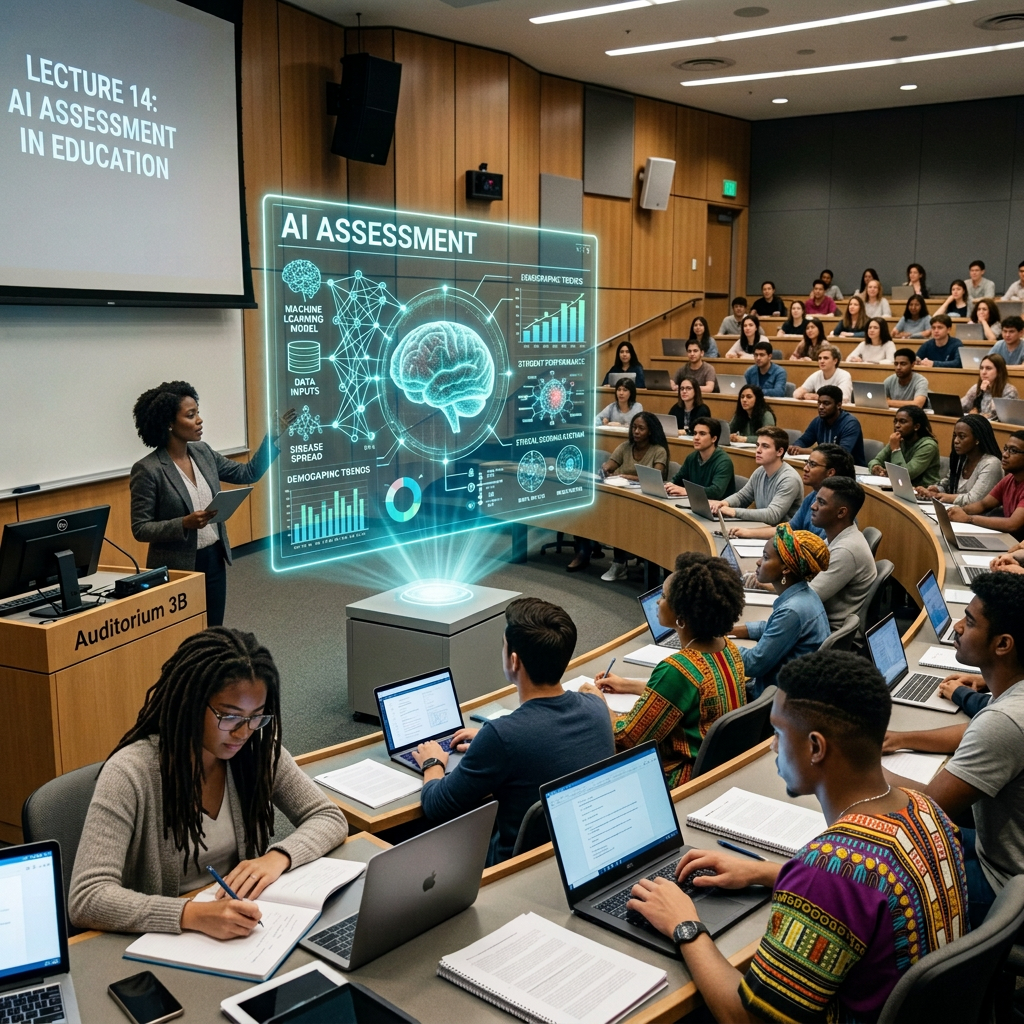
If artificial intelligence has exposed one major weakness within higher education, it is not the curriculum. It is assessment.
For generations, universities have relied on essays, examinations, research papers, laboratory reports, and dissertations as primary indicators of student learning. These assessment methods evolved within a world where demonstrating knowledge required students to independently locate information, organise arguments, synthesise evidence, and communicate their reasoning. The finished assignment served as a reasonably reliable proxy for the intellectual processes that produced it. Although imperfect, these approaches reflected an educational environment in which access to information was limited and the production of coherent academic work required substantial individual cognitive effort.
Artificial intelligence has fundamentally changed this assumption. Today, many conventional university assessments can be completed, at least in draft form, within minutes using generative AI. Essays can be generated instantly. Literature reviews can be synthesised. Computer code can be produced with remarkable speed and accuracy. Statistical analyses can be interpreted by AI-assisted software. Even policy briefs, reflective summaries, and research proposals can be drafted with increasing precision. Consequently, the educational challenge is no longer whether students possess the technical ability to use AI. That reality is already here. The challenge is whether existing assessment models continue to measure the intellectual capabilities universities claim to develop.
This moment requires universities to confront an uncomfortable but necessary truth. The AI revolution has not rendered higher education obsolete; it has rendered many traditional assessment practices insufficient.
The response should not be a return to handwritten examinations or blanket prohibitions on AI. Such measures may offer temporary reassurance but fail to address the deeper issue. Artificial intelligence is now part of professional practice across law, medicine, engineering, education, business, journalism, architecture, public administration, and scientific research. Universities should therefore prepare students to work responsibly with AI rather than pretend it does not exist. The central policy challenge is designing assessments in which the value lies not in producing answers but in demonstrating judgment, reasoning, creativity, ethical reflection, and contextual understanding.
Educational research has long argued that assessment shapes learning more powerfully than curriculum itself. John Biggs’ theory of constructive alignment emphasises that students organise their learning around what is assessed rather than what is merely taught (Biggs & Tang, 2011). If assessment rewards memorisation, students memorise. If it rewards reproduction, students reproduce. If it rewards critical inquiry, collaboration, reflection, and innovation, students gradually develop those capabilities. Assessment therefore sends a powerful message about what universities truly value. Artificial intelligence makes this insight more important than ever.
Rather than asking whether AI should be permitted in assessment, universities should begin by asking a more fundamental question: What forms of assessment best reveal human thinking in an AI-mediated world?
The answer lies in shifting from assessing products to assessing intellectual processes. One promising approach is the expanded use of oral examinations and oral defences. Long established within doctoral education, oral assessment requires students to explain, justify, defend, and extend their reasoning in real time. It becomes immediately evident whether learners genuinely understand the arguments they present, can respond to unfamiliar questions, and can integrate evidence under conditions of uncertainty. Artificial intelligence may assist students in preparation, but it cannot substitute for authentic intellectual engagement during scholarly dialogue. Research consistently suggests that oral assessment enhances conceptual understanding, communication skills, and higher-order reasoning while reducing opportunities for academic misconduct (Joughin, 2010).
Similarly, authentic assessment offers an increasingly relevant framework for AI-era universities. Authentic assessments require students to apply knowledge within realistic professional contexts rather than reproduce information in artificial academic settings (Villarroel et al., 2018). Instead of writing generic essays, students might develop public policy recommendations for local governments, design engineering solutions for community challenges, create business innovation strategies for emerging enterprises, prepare environmental impact assessments, or analyse complex healthcare cases. Such assessments value the quality of reasoning, stakeholder engagement, ethical decision-making, and contextual application over the production of text alone.
Policy simulations and scenario-based learning similarly cultivate capacities that artificial intelligence cannot independently replicate. Students confronted with evolving crises, whether climate emergencies, constitutional disputes, organisational failures, public health outbreaks, or diplomatic negotiations, must make decisions using incomplete information, competing priorities, and uncertain outcomes. These environments require judgment rather than information retrieval. They reveal how learners think rather than merely what they know. Higher education should also increasingly embrace live problem-solving assessments. These require students to analyse unfamiliar problems under supervised conditions, articulate their reasoning aloud, collaborate with peers, and adapt their thinking as new evidence emerges. Such assessments reflect the realities of contemporary professional practice, where success depends less on recalling predetermined answers than on responding thoughtfully to novel situations.
Another promising direction involves expanding the use of capstone projects that integrate knowledge across disciplines while addressing genuine societal challenges. Capstone experiences require sustained inquiry, collaboration, stakeholder engagement, iterative learning, and reflective practice over extended periods. Because they unfold through multiple stages involving supervision, peer feedback, field engagement, and revision, they make the learning journey itself visible rather than focusing exclusively on the final product. Portfolio assessment similarly deserves renewed attention. Rather than evaluating isolated assignments, portfolios document students’ intellectual growth over time through collections of projects, reflections, presentations, research outputs, creative work, and evidence of professional development. Properly designed portfolios encourage learners to demonstrate progression, integrate feedback, and critically reflect upon their own development. They also mirror lifelong learning practices increasingly expected within rapidly evolving professions.
One of the most underutilised yet powerful assessment approaches remains the reflective journal. Reflection is frequently misunderstood as a personal narrative rather than a rigorous intellectual exercise. In reality, structured reflective practice requires learners to evaluate decisions, analyse assumptions, identify limitations, integrate theory with experience, and plan future improvement. Donald Schön’s work on the reflective practitioner demonstrated decades ago that professional expertise develops not merely through experience itself but through disciplined reflection upon experience (Schön, 1983). In the AI era, reflective writing becomes even more valuable because it reveals how students interpret, question, and learn from interactions with intelligent technologies. Universities should also expand community-engaged learning and project-based assessment. Working with local communities, government agencies, civil society organisations, schools, hospitals, industries, and entrepreneurs exposes students to complex realities where problems rarely have single correct answers. Community-based assessment requires empathy, collaboration, ethical reasoning, contextual awareness, and adaptive problem-solving, qualities that remain deeply human despite rapid technological advancement.
Equally important is the growing need for interdisciplinary challenge-based learning. Artificial intelligence increasingly operates across disciplinary boundaries, affecting law, medicine, engineering, agriculture, education, economics, environmental science, theology, and public policy simultaneously. Universities should therefore create opportunities for students from different disciplines to collaborate on solving complex societal challenges. Such experiences cultivate systems thinking, communication, negotiation, and intellectual flexibility, competencies consistently identified by the OECD, UNESCO, and the World Economic Forum as essential for future graduates.
These recommendations do not imply abandoning essays altogether. Writing remains one of the most powerful vehicles for developing critical thought. Rather, essays should increasingly become one component within richer ecosystems of assessment that also evaluate oral reasoning, collaborative inquiry, ethical judgment, creativity, reflection, and practical problem-solving. The objective is not to eliminate traditional assessment but to rebalance it toward forms of evidence that more accurately capture human intellectual capability in an AI-enabled world.
The universities that thrive in the coming decades will not be those that most effectively police artificial intelligence. They will be those that most effectively redesign assessment around the capacities artificial intelligence cannot replace.
Ultimately, assessment reform is not about preserving academic integrity alone. It is about preserving intellectual integrity, the commitment to ensuring that every graduate has genuinely developed the habits of mind that higher education exists to cultivate.
Faculty Need AI Pedagogical Literacy, Not Just Digital Literacy
Artificial intelligence has generated widespread speculation about the future of academic work. Headlines frequently ask whether AI will replace lecturers, automate teaching, or render universities obsolete. Such questions are understandable but fundamentally misplaced. Throughout history, transformative technologies have consistently altered professional roles without eliminating the need for human expertise. Artificial intelligence is unlikely to replace university educators. It is, however, profoundly changing what it means to be one.
The future of higher education will depend less on whether lecturers can use artificial intelligence and more on whether they can teach students how to think critically in partnership with it.
This distinction marks one of the most important yet least discussed dimensions of AI policy in higher education. Across many universities, considerable attention has been devoted to helping faculty become digitally competent. Workshops increasingly introduce lecturers to generative AI platforms, automated marking tools, adaptive learning systems, AI-assisted research software, and digital content creation. While these initiatives are valuable, digital competence alone is insufficient. Knowing how to operate AI technologies is fundamentally different from understanding how AI reshapes learning, cognition, assessment, ethics, and intellectual development.
Universities therefore need to move beyond digital literacy towards what might be termed AI pedagogical literacy.
AI pedagogical literacy refers to educators’ capacity to integrate artificial intelligence into teaching in ways that strengthen rather than weaken learning. It requires understanding not only how AI functions technically but also how it influences cognitive development, student motivation, assessment validity, disciplinary knowledge, ethical reasoning, and academic integrity. Most importantly, it requires lecturers to redesign educational experiences so that AI becomes a catalyst for deeper inquiry rather than a shortcut around intellectual effort. This transformation fundamentally redefines the educator’s role. For centuries, lecturers have been regarded primarily as transmitters of disciplinary knowledge. Although this conception has long been challenged by contemporary educational theory, remnants of the transmission model remain evident within many university classrooms. Artificial intelligence accelerates the decline of this traditional role because students can now access information, summaries, examples, and even personalised tutoring almost instantly through intelligent systems. Information delivery is no longer the distinctive contribution of the university lecturer.
The educator’s comparative advantage now lies elsewhere. Lecturers become architects of learning rather than distributors of information. They become designers of intellectual experiences. Facilitators of inquiry. Mentors of critical reasoning. Cultivators of ethical judgment and developers of professional identity.
These responsibilities cannot be automated because they depend upon relational engagement, disciplinary wisdom, contextual understanding, and moral leadership. This shift also requires educators to model critical engagement with AI itself. Students should observe lecturers questioning AI-generated outputs, identifying inaccuracies, recognising algorithmic bias, evaluating evidence, acknowledging uncertainty, and demonstrating intellectual humility. In doing so, faculty communicate an essential lesson: artificial intelligence is an extraordinarily powerful cognitive partner, but it is not an unquestionable authority.
Equally important is the need for educators to explicitly teach students how to use AI responsibly. Universities should no longer assume that digital natives automatically possess AI literacy. In reality, many students know how to generate outputs but lack understanding of prompt design, verification strategies, source evaluation, ethical disclosure, bias detection, privacy implications, and responsible academic use. Faculty therefore become guides in helping students distinguish between productive AI collaboration and passive dependence. Professional development consequently becomes a strategic institutional priority rather than an optional activity. Universities should invest in sustained programmes enabling lecturers to understand cognitive science, assessment redesign, AI ethics, disciplinary applications of generative AI, learning analytics, and evidence-based pedagogical innovation. One-off workshops introducing AI tools will not be sufficient. Faculty require continuous opportunities to experiment, reflect, collaborate, and evaluate emerging educational practices within their own disciplines.
Institutional leadership has a corresponding responsibility. Universities should establish communities of practice where educators share successful AI-enabled teaching approaches, discuss ethical dilemmas, evaluate new technologies, and collectively develop institutional standards. Such collaborative learning cultures reduce uncertainty while encouraging innovation grounded in educational research rather than technological enthusiasm alone. AI pedagogical literacy must also become a component of academic quality assurance. Teaching excellence frameworks should increasingly recognise educators who successfully integrate AI while strengthening higher-order thinking, reflective practice, interdisciplinary collaboration, and authentic learning. Teaching awards, curriculum review processes, and educational leadership programmes should all acknowledge the growing importance of AI-informed pedagogy. Perhaps most important, faculty themselves must embrace a renewed understanding of expertise. In an era where students can instantly retrieve information, academic authority no longer rests primarily upon possessing knowledge unavailable elsewhere. Instead, authority increasingly derives from helping learners make sense of complexity, navigate ambiguity, exercise ethical judgment, connect theory with practice, and cultivate intellectual character.
Artificial intelligence therefore does not diminish the importance of university educators. It elevates it. The lecturer of the future will not be defined by the quantity of information they can deliver more effectively than an algorithm. They will be distinguished by their capacity to cultivate the qualities that no algorithm can teach independently: wisdom, discernment, curiosity, courage, integrity, empathy, intellectual humility, and the disciplined habit of critical inquiry. The universities that flourish in the age of artificial intelligence will not simply invest in smarter technologies. They will invest in smarter pedagogies and in educators capable of ensuring that every technological advance is matched by an equally ambitious investment in human intellectual development.
For if artificial intelligence is transforming the future of learning, it is the university lecturer who must ensure that learning remains profoundly and unapologetically human.
Thank you for following this series of articles in this critical conversation to here. The last bonus part 5 of the article, I will be sharing “Eight Policy Priorities for Re-imagining Critical Thinking in the Age of Artificial Intelligence”
Author
Dr. Gilbert A. Ang’ana is the Dean of School of Leadership, Business, and Technology at Pan Africa Christian (PAC) University whose research focus is on values-based and collaborative leadership and governance in Africa. He is a leadership, governance and policy consultant, teacher and coach and the Founder of Accent Leadership Group and Accent Global Initiative (Think Tank)